AI Policy Lab Day 2025: Highlights and Reflections (Recording Available)

Date & Location: November 19, 2025, Umeå University, Västerbotten, Sweden

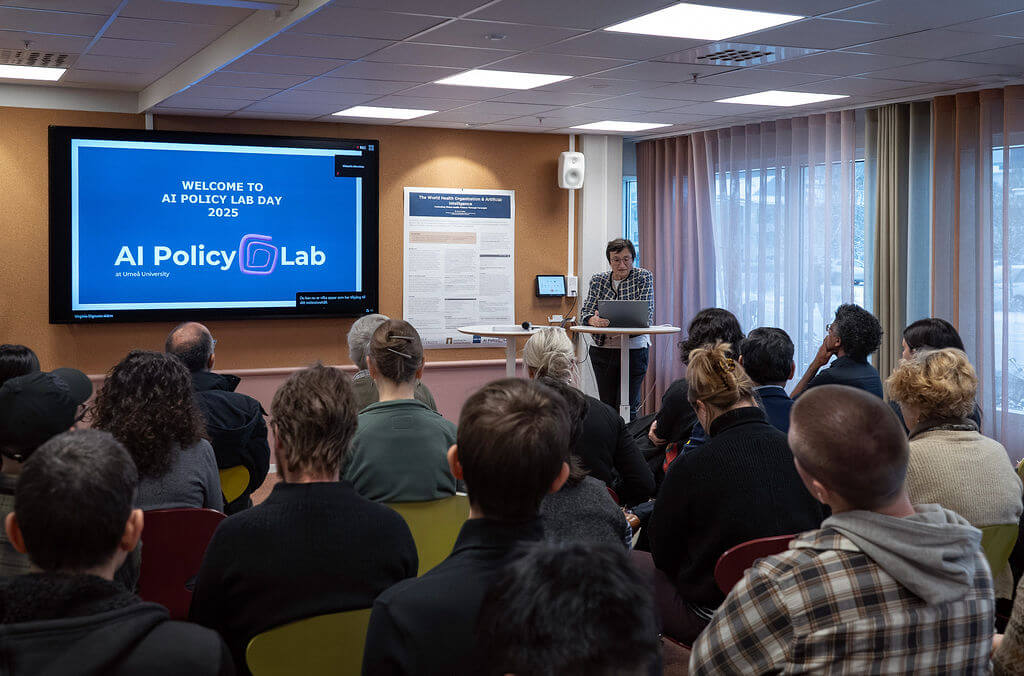
The AI Policy Lab Day 2025 was rich in insight and exchange.

Sennay Ghebreab delivered a keynote that grounded Question Zero in lived experience, reminding us that the decision to use, or not use AI is never a static checkpoint. He urged us to think in terms of Question Infinity: a continuous, reflective process in which risks and opportunities are held in tension rather than framed as opposites.

Daniel McQuillan‘s talk added a powerful systemic lens. By framing contemporary AI as a product of deeper structural failures, he challenged us to confront the material and social realities beneath technological optimism. His proposal of decomputing, a combination of degrowth, conviviality, and care, called us to imagine responses that prioritise collective well-being over speed or scale.

Our researchers’ posters reflected a striking level of maturity. Their work is rigorous, thoughtful, and already influencing wider debates on responsible AI. It was encouraging to see how confidently they engaged with participants and how deeply their projects connected to real societal needs (Rachele Carli, Petter Ericson, Jason Tucker, Tatjana Titareva, Themis-Dimitra Xanthopoulou, PhD Mattias Brännström).

Throughout the afternoon, participants brought curiosity, openness, and an eagerness to engage in discussions and informal exchanges between sessions.

The evening screening of Humans in the Loop added an emotional and narrative dimension that tied the day together. The dramatized story, rooted in the real experiences of data workers in India, wove together the daily realities of annotation labour with local culture, personal aspiration, and the power of lived experience. It captured the invisibility of this global workforce while honouring their agency and resilience. The discussion that followed made clear how crucial these perspectives are for any serious conversation on responsible AI.

A full day of insight, critical dialogue, and shared commitment.

Recordings

Slides

Could not load the image

Could not load the image

1 / 2

Responsible AI Self-assessment Workshop: Start with Question Zero


Date & Location: August 27, 2025, Umeå University, Västerbotten, Sweden

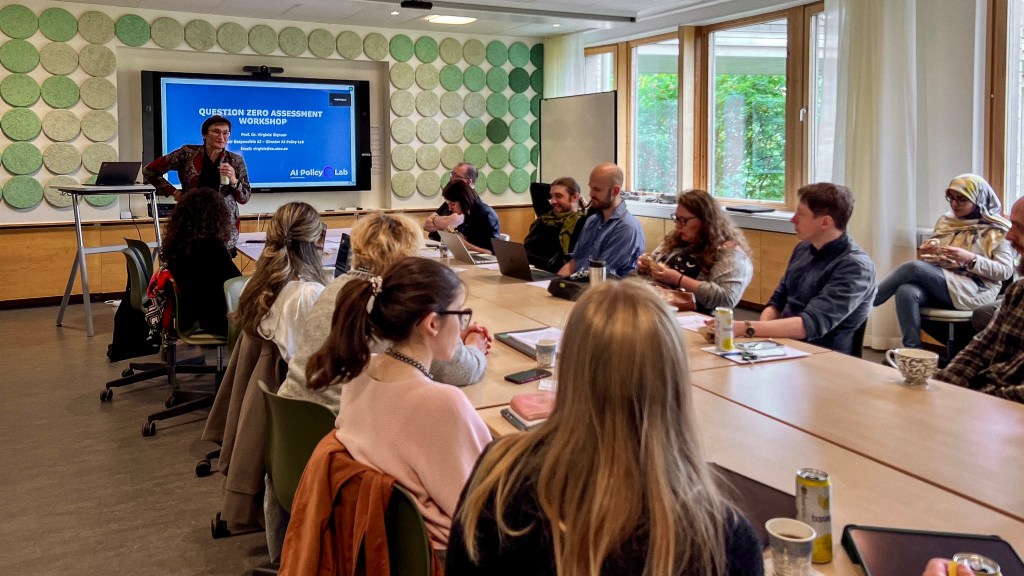
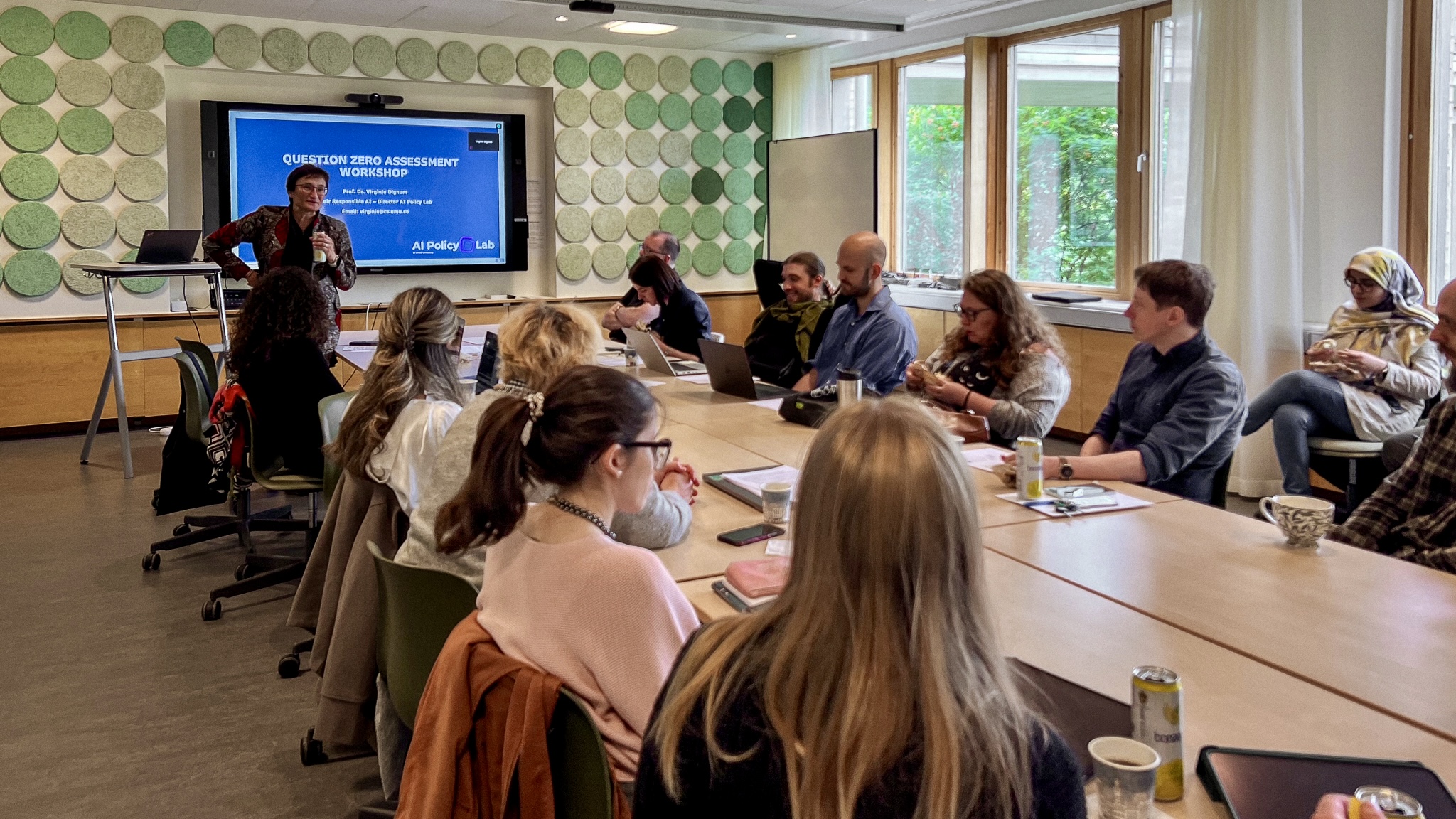
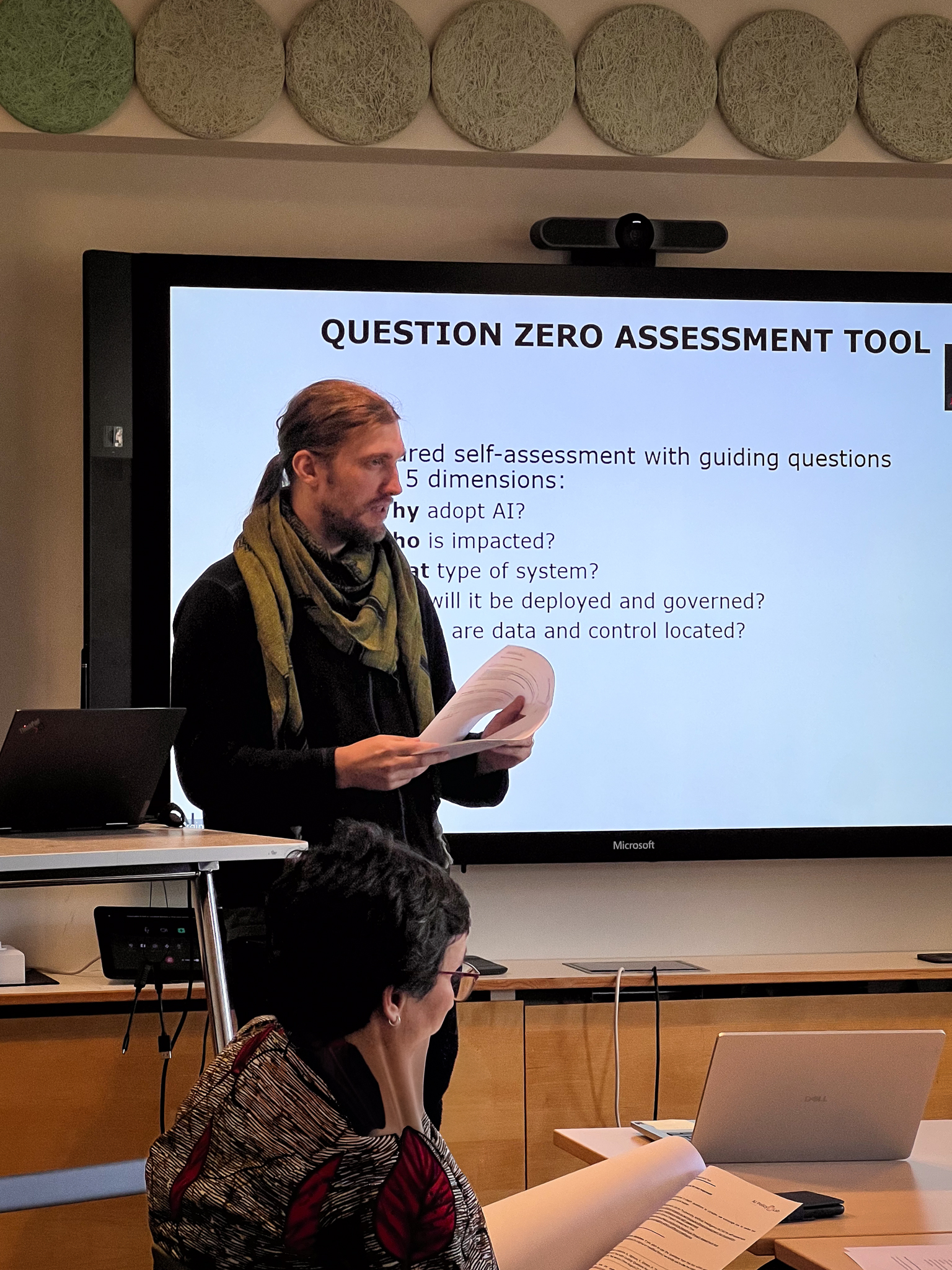
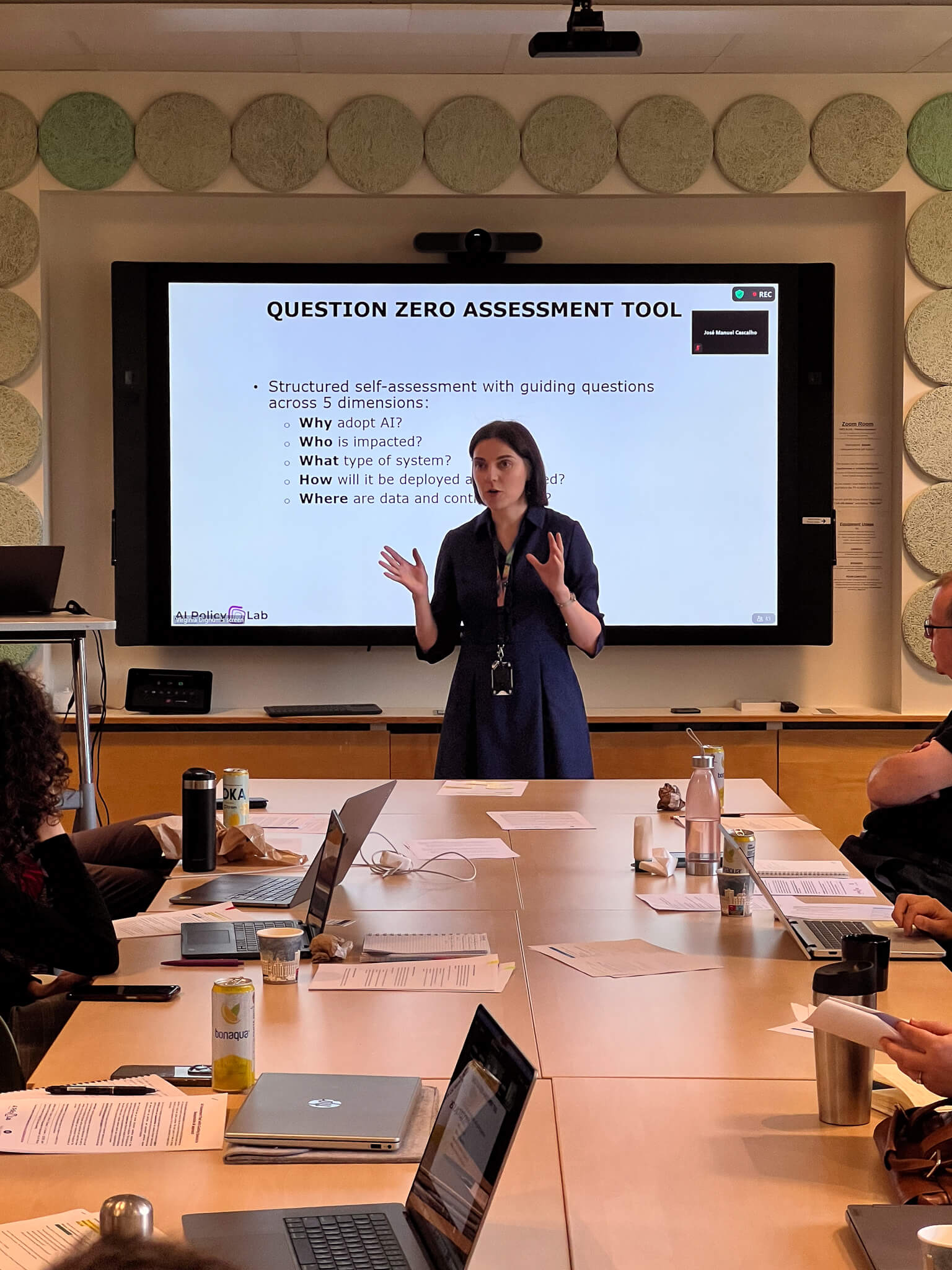
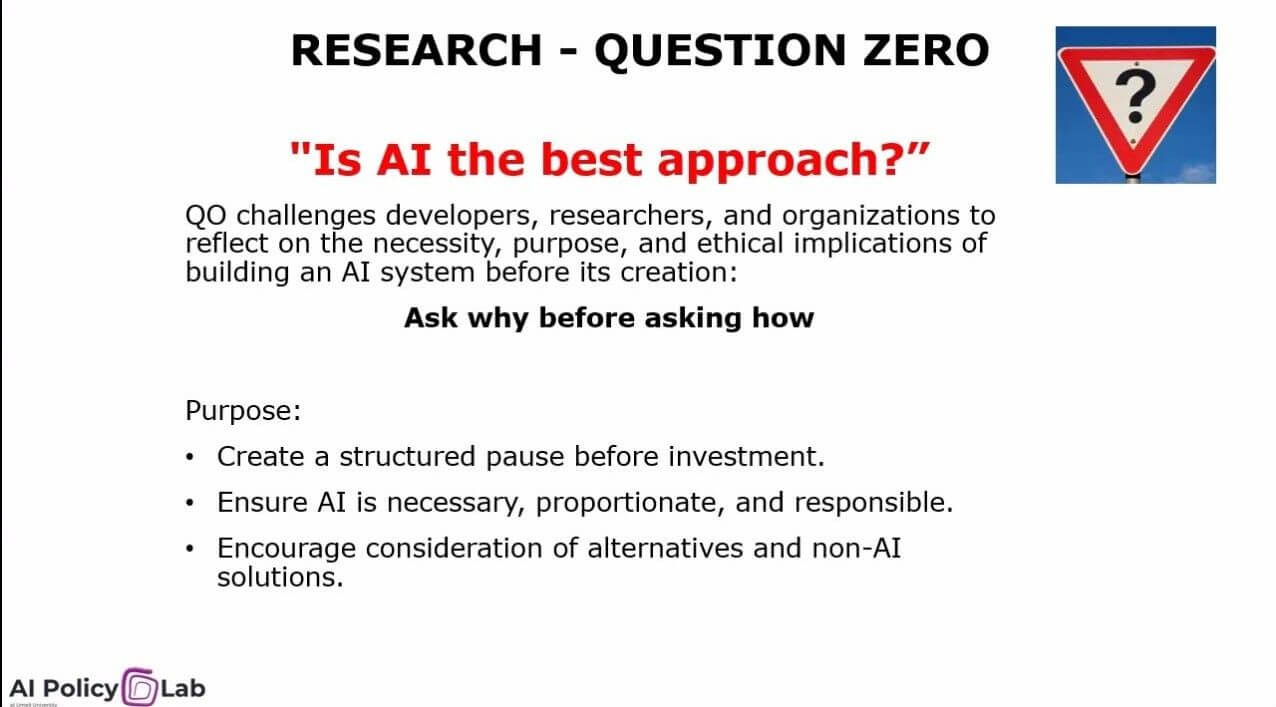
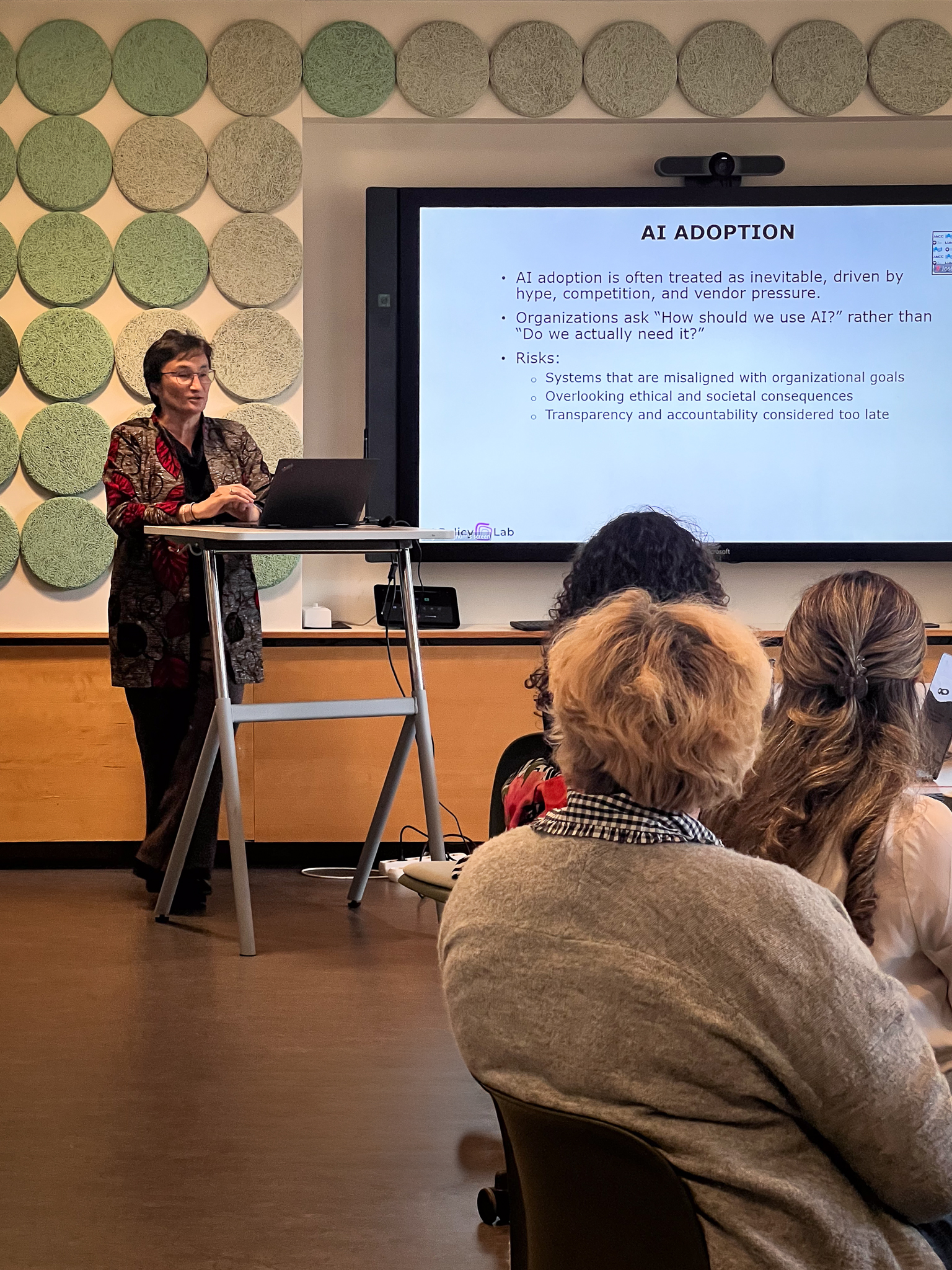
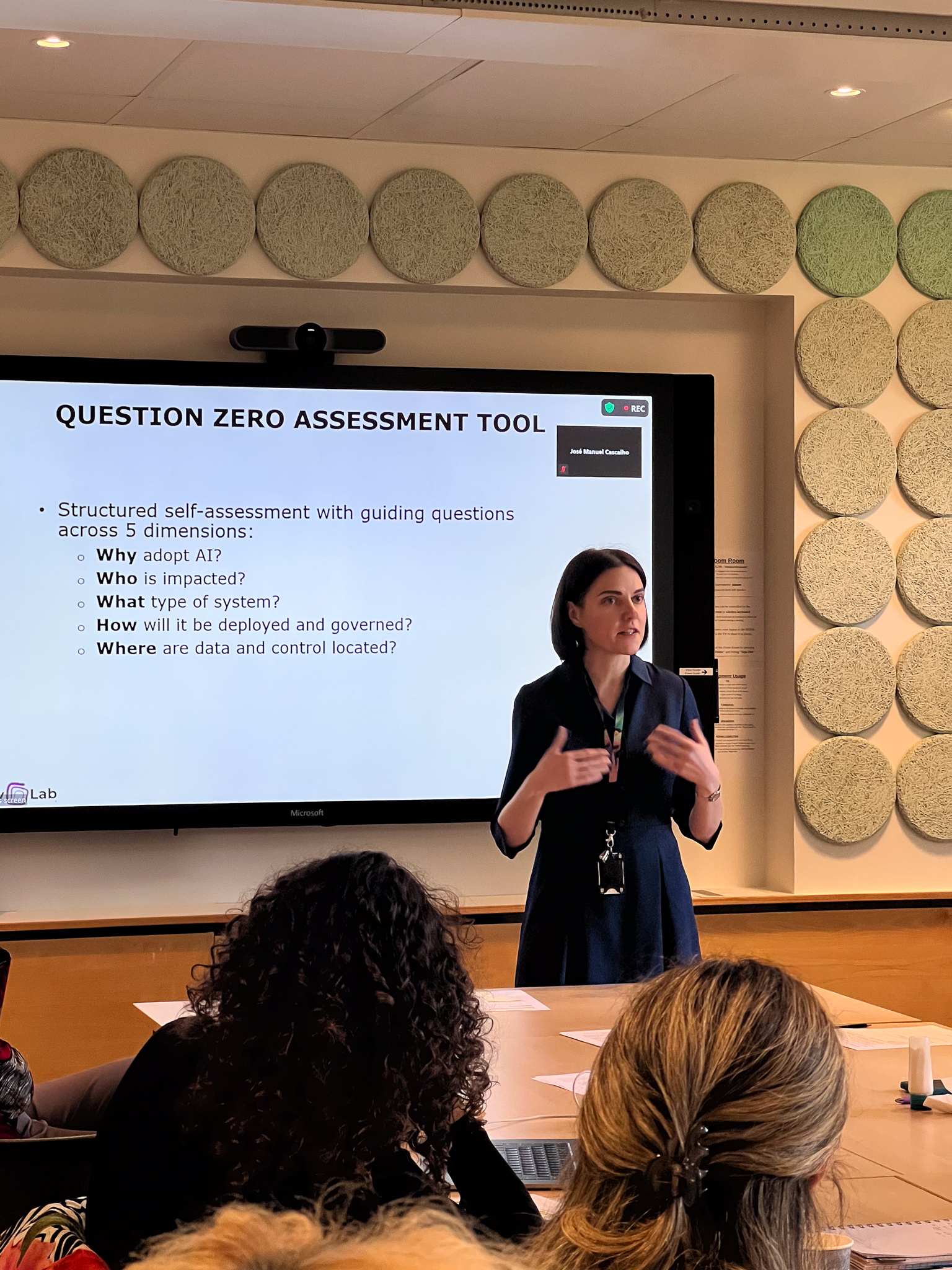
On 27 August 2025, more than 100 participants joined the AI Policy Lab workshop Responsible AI Self-Assessment: Start with Question Zero at Umeå University and online. Together, we tested and debated the Responsible AI Self-Assessment Tool, designed to help organisations pause, reflect, and ask why before moving into AI adoption.

You can explore the current version of the tool here:
Responsible AI Self-Assessment Tool (PDF)

Highlights from the discussions

The workshop brought together voices from academia, industry and the public sector, sparking vibrant conversations around responsible AI. Participants reflected on questions such as:

  • Should a clear AI clarification step be required before entering Question Zero (“Why do you plan to adopt an AI system?“)
  • Should organisations complete a process pre-assessment before starting with AI?
  • What kind of work should remain human-only?
  • How can transparency and ethics be maintained when deciding between automation and augmentation?
  • Why might other non-AI solutions not solve the problem at hand?

We are deeply grateful to everyone who joined, shared perspectives and challenged assumptions. Your input is vital to shaping a practical, responsible approach to AI adoption.

Next steps

The tool is still a work in progress. Feedback from this workshop will be implemented directly into the next version of the tool. Future workshops will continue to stress-test and evolve it, ensuring it meets the needs of diverse organisations working with AI.

As Virginia Dignum, Director of the AI Policy Lab, put it:

“Responsible AI isn’t AI-first, it’s people-first. It starts by asking why, not rushing to deploy.”

Interested in taking part in upcoming sessions? Keep an eye on our website and LinkedIn page for updates.

Global AI Policy Research Network Launched at UN IGF 2025 (Recording available)

Workshop #288: An AI Policy Research Roadmap for Evidence-Based AI Policy
Date & Location: June 26, 2025, Oslo, Norway

At the UN’s Internet Governance Forum (IGF) 2025 in Oslo, Norway, AI Policy Lab @Umeå University (Virginia Dignum, Jason Tucker, Tatjana Titareva and colleagues) and Mila – Quebec Artificial Intelligence Institute (Isadora Hellegren Létourneau, and colleagues), in cooperation with our partners including Alex Moltzau, Eltjo Poort, Neema K. Lugangira, and many others, launched the Global AI Policy Research Network (GlobAIPol). The network invites diverse stakeholders to share practical knowledge that supports ethical, transparent, and evidence-based practices for shaping inclusive and trustworthy AI policies. The session also encouraged global stakeholders to endorse the Roadmap for AI Policy Research.

Explore GlobAIPol
Endorse the Roadmap for AI Policy Research

Three key takeaways:

  • AI regulation requires agile, evidence-based approaches – technological policymaking is not set in stone.
  • Multiple complementary frameworks serve diverse regional needs better than universal governance approach.
  • Effective AI policy is not only about technology – it’s about equity, inclusion, and broader societal impacts.


The official session summary is now available:

Read the official session summary on the IGF website (tab “Report”)
Watch the full session recording

Key insights from our session:

“AI does not happen to us! AI is designed by humans. We make the choices.” – Professor Virginia Dignum’s keynote reminded us that before asking how to implement AI, we must ask Question Zero: Is AI the best option here? We need to shift from fragmented, reactive policies to coordinated, evidence-based strategies rooted in ethics and justice.

The interventions and discussion revealed critical lessons from global perspectives:

The EU is demonstrating promising approaches with the European AI Office expanding from 97 to 140 staff by the end of 2025, supporting regulatory sandboxes and international collaboration including a €5 million generative AI initiative with Africa.

In healthcare, we must move beyond treating AI as a “magic pill” and build upon existing regulatory frameworks – just as we trust paracetamol today because of rigorous oversight developed several decades ago.

Well-designed regulation stimulates innovation rather than slows it down. Different countries need diverse legislative approaches harmonised with local values, not a one-size-fits-all global AI governance structure.

The time to act is now. AI is shaping our collective future, and how we act today will define who benefits, who is heard, and who is left behind.

Tracing labour, power, and information in Artificial Intelligence Systems

Petter Ericson (AI Policy Lab, Department of Computing Science, Umeå University)


Published on 24 June 2025

1. Introduction

It is common for technology to be used to obscure the role of humans, and artificial intelligence (AI)is a field where this is even more true than for many others. From ghost workers and data scraping to algorithmic management and automated decision making, AI technologies are used to displace, appropriate, and hide human labour in various ways. Decisions are hidden inside technical systems, externalising them from individuals and organisations who could be held meaningfully accountable, which can make agency and power flow in new and often poorly understood ways. By having automated systems imitate humans, teleworkers can be seamlessly swapped in and out as needed with users none the wiser, making the systems appear significantly more capable than they actually are.

A useful abstraction for studying and exposing the workings of these systems is to consider how and where information is flowing through them. However, tools for such analyses tend to either be highly abstracted and focused on the broader sociotechnical systems where AI components are situated, or highly technical and focused on the details of specific software and hardware architectures, or on idealized and abstract models thereof. The proposed work will attempt to bridge this gap. On the one hand, it will take a more rigorous approach grounded in information theory to qualify and quantify the information that the humans involved share both through some specific technical system and through outside channels. On the other hand, it will take a wider view on the concrete workings of those technical systems, incorporating sociotechnical metadata into analyses of digital information flows.

In sum, we aim to use tools and methods from information theory and sociotechnical system modelling, together with formal graph models and complexity theory, to investigate and explain how diverse human labour and knowledge is discretized, datafied, and expressed throughout the development and deployment of different types and architectures of AI systems.

A complementary aim of this work is to build on and further develop existing research connecting information, computation, labour, and value, and how these concepts interact, specifically in the context of AI systems, making concrete contributions to interdisciplinary studies on AI and data work. A second major aim is to yield new insights into how to quantify and qualify information flows, through a focused study of sociotechnical systems involving AI components, where information and its flows in the digital realm can be directly studied, and comparisons can be made to both models and empirical realities of the social realm surrounding them.

Ultimately, we aim to investigate the following research questions:

* RQ1 What types of information flows can be identified within different AI system architectures, and how can these be formally categorized?
* RQ2 How do human actors contribute to and engage with information flows in and around AI systems, and how can these social interactions be systematically modeled?
* RQ3 How can we develop and validate models of information flows in AI-based sociotechnical systems that integrate both technical and human components? * RQ4 How do modeled information flows reflect or reinforce particular organizational or institutional power structures?

2. Related work

Though to the best of the authors knowledge there is very little research on precisely the present topic, its interdisciplinary nature means that there are a number of intersecting areas of active research. In particular, works that cover the intersection between AI and information theory, between information theory and labour, between labour and AI, and between any of these three areas and sociotechnical modelling are all relevant.

For the first intersection, Jeon and Roy have recently investigated the connections between Bayesian machine learning and Shannon information theory, drawing an equivalence between the cumulative errors during a learning process of an optimal machine learning algorithm, and the amount of information contained in the data. From a different angle, several works such as Tseng et al. [2] and [3] have looked specifically at large language models (LLMs), drawing on compression and entropy calculations to study the use, and training, respectively of LLMs as related to natural language texts.

For the second, Dantas [4] has drawn direct connections between information and both labor and value in an explicitly Marxist framework, distinguishing between not only use and exchange value, but also semiotic value, and deriving a specific notion of information work which will be of direct use in the proposed work. Dantas also draws a distinction between random and redundant information work, which is similar to the distinction between semantic and syntactic information work in [5] which is further nuanced into an explicit spectrum in [6].

The third intersection is itself a broad area, with many different aspects of relevance. Nguyen and Mateescu [7] gives a good overview of the current landscape in relation to Generative AI specifically, while Davis [8] provides a broader review of relevant issues, making an explicit (and useful) distinction between cases where AI use impacts labour demand (through automation) and those relating more to worker power (through surveillance, algorithmic management, and the like). Further, works such as Crawford [9], Miceli and Posada [10], Gray and Suri [11], Merchant [12], Sadowski [13], and Mejias and Couldry [14] are all relevant for further developing this work. The Data Workers Inquiry (https://data-workers.org) will be another important source of alternate perspectives on AI and labour.

In terms of studying AI sociotechnical systems, once again several active areas are of interest. In particular Wu et al. [15] has developed a framework for integrating various types of models of sociotechnical systems (STS) into a single meta-model. Several modelling languages for sociotechnical systems exist, including STS-ml [16], which was developed for cybersecurity applications, and the host of standards and notations related to Business Process Model and Notation (BPMN), such as Decision Model and Notation (DMN), which is particularly relevant for models integrating AI decision support systems. However, all of these abstractions and models tend to integrate assumptions that are not always helpful for the purposes of this work. A relevant example of how existing modelling framework scan be extended to cover new areas is [17], which adds properties and functionality to STS-ml in order to check sociotechnical systems for compliance with the EU General Data Protection Regulation (GDPR).

A relevant parallel effort, though not directly related to the work we propose here, is that of Gutierrez Lopez and Halford [18], who aim towards an extension of XAI principles that including the sociotechnical environment of the machine learning system.

3. Aims

The main contribution of this work will be to integrate previous work on sociotechnical systems modelling with several notions of information and labour, specifically in the context of artificial intelligence. An additional benefit of this work will be to lay a basis for a further analysis of agency and accountability: By studying the information flows and potential inputs and decisions from humans involved in an AI sociotechnical system, together with an analysis of the power relations among them, accountability and responsibility can be transparently and meaningfully assigned.

We hope to make meaningful contributions to the practical use of information theory and information flow, as well as yield actionable and concrete directions for further exploration of new AI sociotechnical architectures. As part of this, a major component will consist of qualitatively and quantitively analysing the information flows into and out of AI and ML systems, which will also give new and useful insights into the design of Hybrid AI systems in particular.

By creating concrete tools and methods for tracing information flows through both technical and social layers of AI systems, this work will attempt to offer not just theoretical insight, but practical value for those developing, regulating, or critically analyzing such systems. In a time when the societal consequences of AI are increasingly opaque yet consequential, this research will provide actionable models that can inform transparency standards, system audits, and future AI governance efforts.

4. Preliminary results

4.1. Categories of information

A foundational topic of this work includes clarifying and classifying different types of information. In particular, though at extreme small ranges reality can occasionally appear to be digital, for most practical purposes, it is continuous. In contrast, digital information, and computer and AI systems, while implemented on physical hardware, are conceptually and practically discrete. As such, while abstractions of the human and physical sections and relations of a sociotechnical system are going to inevitably be lossy, for the digital parts it is in principle possible to be both precise and concrete. This then, must be our first distinction between fundamentally different types of information: Abstracted notions and models of the real world, and concrete digital bits and bytes.

In terms of different theoretical notions of information, we further contrast the more mathematical definitions of Shannon [19] (’minimal code’) and Kolmogorov [20] (’minimal program’) with the Batesonian concept of ’a difference which makes a difference’ [21]. A fourth relevant concept is Corning’s’ control information’[22], which rather than connecting Shannon entropy/negentropy directly to the physical thermodynamic concepts with the same name, instead quantifies the amount of information contained in some signal or phenomenon by the amount of physical changes that it can effect. An example taken directly from Corning [22] is that of a car approaching a stoplight. If the driver does not notice or understand the traffic light, there is no control information being transferred by whatever light is shown. Only if the driver both sees the light, understands it, and is prepared to change the future trajectory of the car, is there any control information being sent out by the light switching to red. Broadly, we can thus consider two very different types of information flows: The almost entirely discrete and abstract digital information exchanges between and inside of software components, and the messy, socially situated, and necessarily contingent and abstracted information flows that can be modelled to exist between humans, technological artefacts, and their surrounding physical context. The main interest of this work lies precisely where these information flows intersect and interact.

4.2. Human-computer information interactions

With a minimal distinction of information flows as above, consider the interactions between a human and a computer system: the transfer of information from human to computer will necessarily abstract some concrete intention of the human into a concrete digital signal, but likewise a (digital) computer output will take on a specific meaning to the human which depends on their prior knowledge and the context in which the output is given. We can depict these shifts as in figure 1.

4.3. Analysis example

As an illustrative example of the type of analysis that we aim to make more concrete, detailed, and empirically grounded, consider the case of an article being written about a sports event. It is, at this point, plausible that such an article could be written by a large language model (LLM) given an appropriate prompt, including some sort of summary of the ’relevant facts’ of the event in question (e.g. the final tally of points, who made them when, and any injuries and other specific incidents, which are accessible from some sort of API). The situation would look something like figure 2. We can complicate this picture, however, by adding more context. The article will not reach publication without an editor, and the hidden labour that has resulted in the LLM is entirely absent in our initial figure, as is the work to set up the “sports API” and the later work to feed it with the ’relevant facts’ from observations of the event. A more realistic picture emerges, as in figure 3.

Compare this to a situation where a human writer is the author of the same article. Though the plain (abstract) facts of the event in question may be the same, the human will also have access to an infinitely larger context as part of their writing process, both through direct experience and memory, and through communications with other humans, computer systems, and physical objects such as books and recordings, nevermind the sights, sounds, and smells of the event itself if the writer was also present at the event. In this case, the situation will look more like figure 4. This too can be made more complex, particularly if we imagine the writer to make use of an LLM for writing assistance of some sort, yielding a situation as in figure 5.

5. The path forward

Though primarily based in computing science, the nature of the problems addressed by the work call for an interdisciplinary approach. Notably, by building on existing work in Science and Technology Studies, as well critical marxist literature, it is possible to better situate and analyse the information flows and AI sociotechnical systems inside existing societal power structures and socioeconomic realities. In addition to the various theories of information mentioned in Section 4.1, we will also distinguish between different types of information work, as outlined in Section 2. The distinctions between data, information, and knowledge have been explored e.g. in [23], [24], and these perspectives will also be considered.

We will primarily be building on existing frameworks for the analysis of program structure and information flow through software. Notably, the theory and practice of Quantitative Information Flow (QIF) analysis in computer security, though focused on detecting and plugging information leaks between public and private variables under static source code analysis conditions, offers a range of useful tools for modelling intentional information flows as well. From a software engineering lens, constructing program flow graphs and clearly and consistently delineating components in a software system is a well established practice, with a host of frameworks available for use. An example of an abstract framework for describing program and information flows that has been specifically developed for purposes of describing Hybrid AI systems is the boxology of Harmelen and Teije [25].

For situating a software system in an organisational context, tools from business modelling are available as well, with well-established frameworks such as BPMN, STS-ml and various derivatives having seen extensive use to analyse information flows and decision processes in business contexts. Concretely, the near parts of this work will consist a phase of conceptual and theoretical grounding, studying and comparing existing frameworks for information flow analysis, to arrive at a rigorous and flexible framework for modelling information flows in sociotechnical systems, incorporating the above distinctions and specificities, and giving specific attention to questions of agency and valuation. This work will aim at identifying connections and distinctions in how different frameworks frame decisions, and how labour is considered within them.

In the course of this development, a metadata schema for information and information flows will be developed that can describe and categorise information both in terms of its qualities, its different information contents, as well as its role at a specific point in a described sociotechnical process. Tracing the changes of these properties as attached to a particular piece of information will be an important complement to the analyses of the flows themselves, and of the various transformations imposed on and driven by the information.

During and after these developments, the framework and schema will be empirically applied to real-world cases, both existing ones from the literature, and new and comparable studies of previously understudied sociotechnical contexts. Modelling these flows will be accomplished through direct study of technical artefacts and their documentation, as well as organisational policies and descriptions of their surrounding sociotechnical contexts. These will be supplemented by interviews and surveys of involved stakeholders to elicit new and undocumented perspectives not previously represented even in internal documents.

Through comparative analysis across multiple cases (to be selected to reflect diversity in AI architecture and deployment and across different domains, e.g. public-sector automation, language models, decision-support tools) the framework will be further refined to capture how different system configurations mediate flows of information, labour, and power across different AI configurations. Ultimately, we aim for a formal, extensible modelling framework for analyzing information flows in sociotechnical systems involving AI, as well as a richly annotated library of concrete case studies. Additionally, we aim to make both conceptual and methodological contributions to the study of accountability, power, and labour in AI, as well as help drive further developments in related fields.

References

[1] H. J. Jeon, B. V. Roy, Information-Theoretic Foundations for Machine Learning, 2024. URL: http://arxiv.org/abs/2407.12288. doi:10.48550/arXiv.2407.12288, arXiv:2407.12288 [stat].

[2] Y.-H. Tseng, P.-E. Chen, D.-C. Lian, S.-K. Hsieh, The semantic relations in LLMs: An informationtheoretic compression approach, in: T. Dong, E. Hinrichs, Z. Han, K. Liu, Y. Song, Y. Cao,C. F. Hempelmann, R. Sifa (Eds.), Proceedings of the Workshop: Bridging Neurons and Symbolsfor Natural Language Processing and Knowledge Graphs Reasoning (NeusymBridge) @ LRECCOLING-2024, ELRA and ICCL, Torino, Italia, 2024, pp. 8–21. URL: https://aclanthology.org/2024.neusymbridge-1.2/.

[3] M. Yin, C. Wu, Y. Wang, H. Wang, W. Guo, Y. Wang, Y. Liu, R. Tang, D. Lian, E. Chen, EntropyLaw: The Story Behind Data Compression and LLM Performance, 2024. URL: http://arxiv.org/abs/2407.06645. doi:10.48550/arXiv.2407.06645, arXiv:2407.06645 [cs].

[4] M. Dantas, Information as Work and as Value, tripleC: Communication, Capitalism & Critique. Open Access Journal for a Global Sustainable Information Society 15 (2017) 816–847. URL: https://www.triple-c.at/index.php/tripleC/article/view/885. doi:10.31269/triplec.v15i2.885.

[5] J. Warner, Labor in information systems, Annual Review of Information Science and Technology39 (2005) 551–573. URL: https://asistdl.onlinelibrary.wiley.com/doi/10.1002/aris.1440390120. doi:10.1002/aris.1440390120.

[6] J. Warner, The spectrum of semantic and syntactic labour, Journal of Documentation 80 (2024)649–664. URL: https://www.emerald.com/insight/content/doi/10.1108/JD-03-2023-0057/full/html.doi:10.1108/JD-03-2023-0057.

[7] A. Nguyen, A. Mateescu, Generative AI and Labor: Power, Hype, and Value at Work, Technical Report, Data & Society Research Institute, 2024. URL: https://datasociety.net/library/generative-ai-and-labor. doi:10.69985/gksj7804.

[8] O. F. Davis, Artificial Intelligence and Worker Power (2024).

[9] K. Crawford, Atlas of AI: power, politics, and the planetary costs of artificial intelligence, Yale University Press, New Haven London, 2021.

[10] M. Miceli, J. Posada, The Data-Production Dispositif, Proceedings of the ACM on Human-Computer Interaction 6 (2022) 1–37. Publisher: ACM New York, NY, USA.

[11] M. L. Gray, S. Suri, Ghost work: how to stop Silicon Valley from building a new global underclass, Houghton Mifflin Harcourt, Boston, 2019.

[12] B. Merchant, Blood in the machine: the origins of the rebellion against big tech, first edition ed., Little, Brown and Company, New York, 2023. OCLC: on1389775757.

[13] J. Sadowski, The mechanic and the luddite: a ruthless criticism of technology and capitalism, University of California Press, Oakland, California, 2025. doi:10.1525/9780520398085.

[14] U. A. Mejias, N. Couldry, Data grab: the new colonialism of big tech and how to fight back, WHAllen, London, 2024.

[15] P. P.-Y. Wu, C. Fookes, J. Pitchforth, K. Mengersen, A framework for model integration and holistic modelling of socio-technical systems, Decision Support Systems 71 (2015) 14–27. URL: https://www.sciencedirect.com/science/article/pii/S016792361500007X. doi:10.1016/j.dss.2015.01.006.

[16] E. Paja, F. Dalpiaz, P. Giorgini, Modelling and reasoning about security requirements in socio-technical systems, Data & Knowledge Engineering 98 (2015) 123–143. URL: https://www.sciencedirect.com/science/article/pii/S0169023X1500052X. doi:10.1016/j.datak.2015.07.007.

[17] C. Negri-Ribalta, R. Noel, N. Herbaut, O. Pastor, C. Salinesi, Socio-Technical Modelling for GDPR Principles: an Extension for the STS-ml, in: 2022 IEEE 30th International Requirements Engineering Conference Workshops (REW), 2022, pp. 238–243. URL: https://ieeexplore.ieee.org/document/9920163/?arnumber=9920163. doi:10.1109/REW56159.2022.00052, iSSN: 2770-6834.

[18] M. Gutierrez Lopez, S. Halford, Explaining machine learning practice: findings from an engaged science and technology studies project, Information, Communication & Society 28 (2025) 616–632. URL:

https://www.tandfonline.com/doi/full/10.1080/1369118X.2024.2400130. doi:10.1080/1369118X.2024.2400130.

[19] C. E. Shannon, A mathematical theory of communication, The Bell System Technical Journal 27(1948) 379–423. URL: https://ieeexplore.ieee.org/document/6773024. doi:10.1002/j.1538-7305.1948.tb01338.x, conference Name: The Bell System Technical Journal.

[20] A. N. Kolmogorov, On Tables of Random Numbers, Sankhy?: The Indian Journal of Statistics, Series A (1961-2002) 25 (1963) 369–376. URL: http://www.jstor.org/stable/25049284, publisher: Springer.

[21] G. Bateson, Form, substance and difference, Essential readings in biosemiotics 501 (1970). Publisher: Springer.

[22] P. A. Corning, Control information theory: the ‘missing link’ in the science of cybernetics, Systems Research and Behavioral Science 24 (2007) 297–311. URL:https://onlinelibrary.wiley.com/doi/abs/10.1002/sres.808. doi:10.1002/sres.808, _eprint:https://onlinelibrary.wiley.com/doi/pdf/10.1002/sres.808.

[23] L. Businska, I. Supulniece, M. Kirikova, On Data, Information, and Knowledge Representation in Business Process Models, in: R. Pooley, J. Coady, C. Schneider, H. Linger, C. Barry, M. Lang (Eds.),Information Systems Development, Springer, New York, NY, 2013, pp. 613–627. doi:10.1007/978-1-4614-4951-5_49.

[24] L. Businska, I. Supulniece, Towards Systematic Reflection of Data, Information, and Knowledge, Scientific Journal of Riga Technical University. Computer Sciences 43 (2011). URL: https://content.sciendo.com/doi/10.2478/v10143-011-0002-9. doi:10.2478/v10143-011-0002-9.

[25] F. v. Harmelen, A. t. Teije, A Boxology of Design Patterns for Hybrid Learning and Reasoning Systems, Journal of Web Engineering 18 (2019) 97–124. URL: http://arxiv.org/abs/1905.12389.doi:10.13052/jwe1540-9589.18133, arXiv:1905.12389 [cs].

Keywords (comma separated):

information theory, information flow, socio-technical system modelling

Related URL (if any):

https://people.cs.umu.se/~pettter/tracing_information_figures.pdf

How to cite this article:

Ericson P. (2025). Tracing labour, power, and information in Artificial Intelligence Systems. AI Policy Exchange Forum (AIPEX). https://doi.org/10.63439/AUHD8541

Time Out of Joint: Historical reflections on AI

Somya Joshi (Stockholm Environment Institute) & Remi Paccou (Schneider Electric)


Published on 27 May 2025

Artificial Intelligence. The very term conjures images of futuristic robots and sentient machines for some, and images of climatic collapse and existential risk to others. This AI hype represents a disjoint in time with both risks and promises. It signals a paradigm shift marked by unprecedented capabilities in information processing, autonomous reasoning, and pattern recognition, challenging traditional notions of progress and sustainability while demanding a nuanced approach to harness its potential responsibly & ethically.

The Three Technological Paradigms: From water wheels to apps:

Human technological evolution can be understood through three major paradigms. The first focused on the transformation of materials, spanning from the Stone Age through the Bronze and Iron Ages(1), where humans developed increasingly sophisticated ways to manipulate their physical environment. The second paradigm, also known as the Industrial Revolution, centered on the transformation of energy. The first industrial revolution (1770–1850), as identified by Schumpeter(2), was driven by water-powered mechanization, including mills and irrigation systems. The following long wave (1850–1900) was enabled by steam-powered technology, revolutionizing transportation with trains and transforming industrial machinery. Around 1900, the Third Kondratieff Cycle began(3), marked by the electrification of society and production from 1900 to 1940. Each revolution introduced new tools, industries, and fundamentally impacted lifestyles.

Today, we stand at the cusp of an era defined by the transformation of information. Late 20th-century digital electronics fueled ICT digitalization, leading to AI disruption. But what does this disjoint in time truly entail? History reveals three fundamental mechanisms that have been central to major technological transitions: transmission, storage, and processing. These mechanisms have propelled every major technological shift: from the wheel and rope of transport to smoke signals and the internet for transmission; from containers and reservoirs to photography and magnetic media for storage; and from fire-making to electronic computation for processing(4).

In 1990, less than 0.05% of the global population used the internet. By 2020, over 59% of humanity was connected (10). Networks now move exabytes monthly, enabling unprecedented global information flow. Storage has mirrored this progression: from physical media like books, we’ve advanced to digital systems that store humanity’s collective knowledge on infinitesimal footprints—a leap from 1% digital in the late 1980s to 99% by 2012. AI compute has completed the picture, with processing power showcasing the most striking leap forward. Today’s supercomputers operate at exaflop speeds, solving in seconds problems that would take humans decades. These leaps in transmission, storage, and processing power form the bedrock of AI, enabled by infrastructure that facilitate information transmission, storage, and processing at unprecedented levels. However, these accelerations come at a cost – both to human societies and the planet.

Continuity and Discontinuity in AI Development

Unlike past technologies that built upon human abilities, AI promises autonomous reasoning, planning, and pattern detection beyond human limits. This shift, especially with the rise of agentic AI systems, challenges traditional augmentation concepts, introducing self-referential mechanisms that redefine intelligence, creativity, and technological agency.

This transformation can be framed through the concept of autopoiesis, where technological systems evolve to create themselves, or sympoiesis, where AI is built upon human knowledge to enable novel futures(6). These theoretical lenses help us understand not only the abstract nature of AI’s development but also its tangible manifestations in the evolution of computational hardware. While computational hardware has experienced profound changes, marked by incremental efficiency gains and increased capabilities, the nature of AI’s advancements, particularly its generative capacity, introduces a new dimension. AI’s generative capacity, as it currently stands, challenges human cognitive boundaries and increases technological opacity, introducing a fundamental break from previous technological trajectories. It is not merely an extension of human capabilities but a transformative force capable of generating insights and futures untethered from human precedent.

Untethered from Planetary Health: Rebound Effects and Sustainability Challenges

Current research warns of potential “rebound effects,” where gains in efficiency paradoxically lead to higher overall consumption—an abundance without limits that could undermine sustainability goals by constraining decarbonization efforts or generating waste through unrestricted growth in AI development(7). Addressing this requires policy interventions and investments in sustainable infrastructure prioritizing accuracy, frugality, proven impact assessments for electricity demand growth—and circular economy practices for both hardware and software. To align AI development with planetary (and by virtue of that human) resilience, guardrails need to be designed within the architecture of AI technologies, at the very heart instead of as an afterthought. This would entail a shift away from a focus on efficiency and optimisation alone, towards a more integrated perspective that considers the entire value chain of AI(8). Furthermore, the environmental impact of AI, including the energy & water consumption of large language models and resource depletion from hardware production, must be addressed via caps and transparent open architecture for data sharing.

From Extraction to Global Common: Resetting AI Development

Another critical discontinuity stems from historical notions—dating back to early industrial revolutions—that “human progress” exists outside of nature, which then reduces our environment to a resource for extraction. Today’s dominant discourse around scaling larger AI models risks perpetuating this extractive mindset despite rising environmental costs like energy & water crises caused by mismatched demand on infrastructure or resource depletion.

We call for a “Global Commons” approach (drawing on the seminal work of Elinor Ostrom(9), which would mean sharing benefits across borders while challenging protectionist development paradigms through sustainable practices. This includes optimizing software, improving models, evaluating environmental impacts, and promoting circular economies. We must also in parallel build global governance, set AI standards, and boost digital literacy through international collaboration. The fundamental question remains: when not to use AI? In other words, we must dare to imagine futures with and without AI, rather than accept it as a fait accompli.

To responsibly leverage AI, we must center its design and direction towards nature aligned principles, address potential risks and harms head on, and foster global collaboration in the face of an increasingly polarizing world. Sustainable strategies require long-term vision, while short-term profits shackle us to false promises of shared progress, which history reveals to be mere mirages.

References

  1. Roos, R. A. (2019). The Stone Age, Bronze Age and  Iron Age Revisited. HISTO THOMSEN V2-. J. Terrestrial Electrostatics.
  2. Schumpeter, J. A. (1939). Business Cycles: A Theoretical, Historical, and Statistical Analysis of the Capitalist Process. McGraw-Hill.
  3. Korotayev, A. V., & Tsirel, S. V. (2010). A Spectral Analysis of World GDP Dynamics: Kondratieff Waves, Kuznets Swings, Juglar and Kitchin Cycles in Global Economic Development, and the 2008–2009 Economic Crisis. Structure and Dynamics, 4.
  4. Arthur, W. B. (2009). The nature of technology: What it is and how it evolves. Simon and Schuster.
  5. Maturana, H. R., & Varela, F. J. (1980). Autopoiesis and cognition: The realization of the living. D. Reidel Publishing Company.
  6. Haraway, D. J. (2016). Staying with the trouble: Making kin in the Chthulucene. Duke University Press.
  7. Paccou, R., & Wijnoven, F. (2024). Artificial intelligence and electricity: A system dynamics approach. ResearchGate.
  8. Crawford, K. (2021). Atlas of AI: Power, politics, and the planetary costs of artificial intelligence. Yale University 1 Press
  9. Ostrom, E., Burger, J., Field, C. B., Norgaard, R. B., & Policansky, D. (1999). Revisiting the commons: local lessons, global challenges. science, 284(5412), 278-282.
  10. “Data Page: Share of the population using the Internet”, part of the following publication: Hannah Ritchie, Edouard Mathieu, Max Roser, and Esteban Ortiz-Ospina (2023) – “Internet”. Data adapted from International Telecommunication Union (via World Bank). Retrieved from https://ourworldindata.org/grapher/share-of-individuals-using-the-internet [online resource]

Keywords:
Artificial Intelligence, Sustainability, Geopolitics, Environment, Automation, Equity

How to cite this article:

Joshi S. (2025). Time Out of Joint: Historical reflections on AI. AI Policy Exchange Forum (AIPEX). https://doi.org/10.63439/DNPK4001

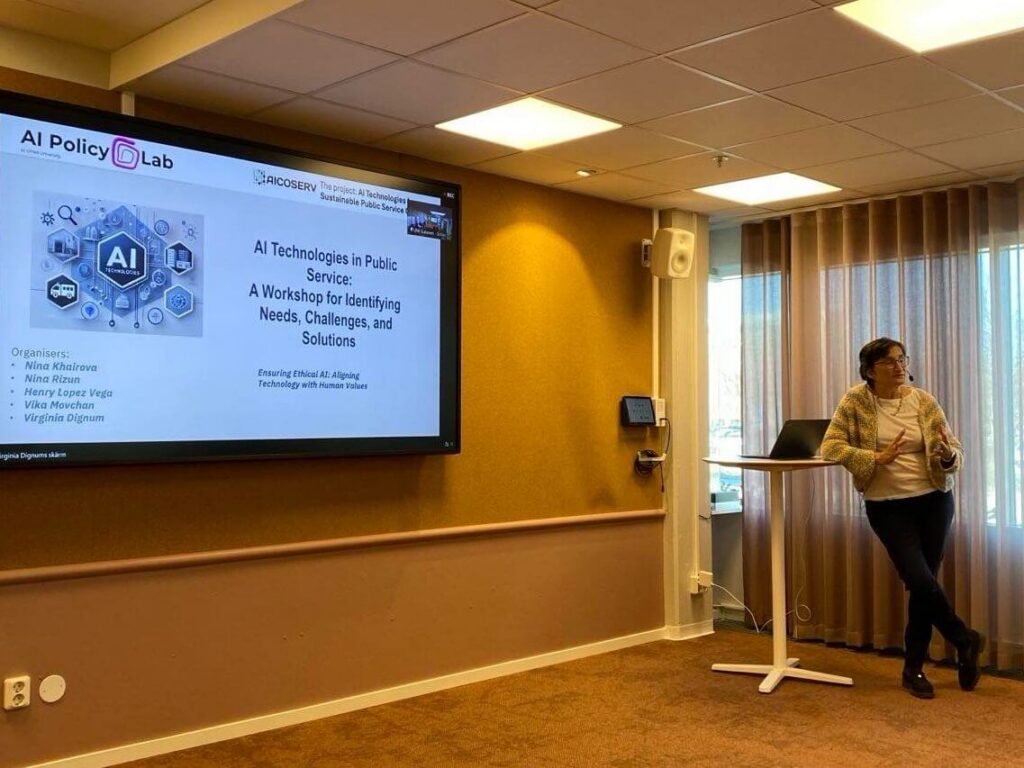
AI Technologies in Public Service: A Workshop for Identifying Needs, Challenges, and Solutions


Date & Location: April 9, 2025, Umeå University, Västerbotten, Sweden

The workshop was organised by the AI Policy Lab in collaboration with the AI Technologies for Sustainable Public Service Co-creation (AICOSERV) project members.

Overview

The workshop brought together more than 50 stakeholders from the public and private sectors, as well as academia, to explore the relationship between barriers to AI adoption in public services and the skills and expertise required to overcome them.

A central theme of the workshop was the “question zero”, the fundamental inquiry of whether AI should be used at all in a given context. As AI technologies continue to advance and expand into complex public sector tasks, the assumption that AI is always the right or necessary solution must be critically examined. The workshop challenged participants to consider not only how AI can be implemented, but to question whether it should be, emphasizing that responsible adoption begins with questioning the appropriateness and desirability of AI in specific domains.

This foundational concern set the tone for broader discussions about trust, governance, transparency, and the skillsets required to navigate the opportunities and risks of AI in public service.

Keynote Address

Professor Virginia Dignum, Director of the AI Policy Lab, opened the workshop with a keynote titled “Governing AI: Why, What, How?”

She addressed the societal and governance implications of AI, focusing on the need to critically evaluate when and how AI should be integrated into public service contexts. Her talk stressed the importance of not overlooking ethical, legal, and operational challenges in the rush to adopt AI.

Regional Case Study: AI in Västerbotten

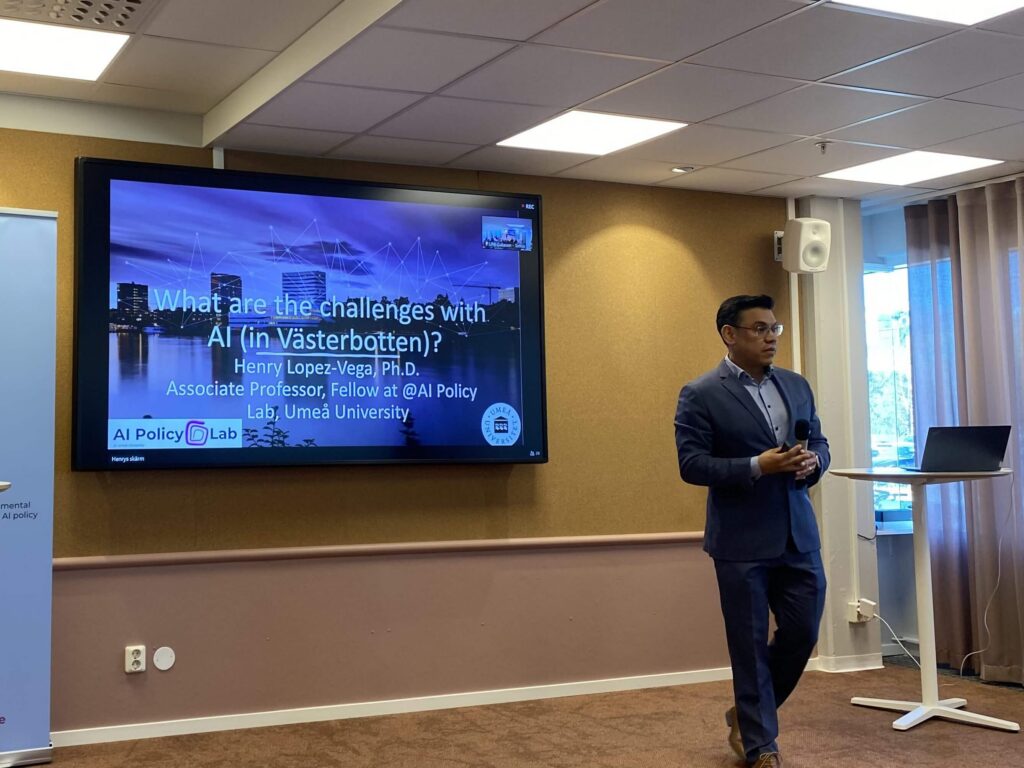
Considering the wide range of public services open to AI adoption, a recurring set of challenges consistently emerges. Whether deploying AI-driven diagnostic tools in healthcare or implementing predictive analytics within smart city infrastructures, public and private sector actors, and community stakeholders face diverse barriers. Henry Lopez-Vega, fellow at the AI Policy Lab, presented on the challenges of AI adoption in the Västerbotten region in his session titled “What are the challenges with AI (in Västerbotten)?”

His research identified three core barriers to building a responsible AI ecosystem:

  • Technological infrastructure and processes within organisations
  • Organisational culture and resistance to change
  • Lack of clarity around AI governance and ownership

Group Discussions: Skills and Stakeholder Engagement

In the second half of the workshop, participants engaged in group discussions focusing on organisational challenges, key stakeholders, and barriers to implementation. Each group then mapped the skills and knowledge needed for responsible AI adoption in their contexts.

For example, in the case of AI-supported recruitment processes, participants identified several critical barriers:

  • Lack of transparency in AI decision-making
  • Biases in training data
  • Limited legal and ethical guidelines for automated hiring

To address these issues, participants emphasized the need for professionals with a blend of competences, including:

  • Knowledge of data protection and anti-discrimination legislation
  • Skills in evaluating and auditing AI systems
  • Awareness of ethical considerations in algorithmic decision-making

Findings and Framework

The increasing efforts to implement AI across various public sector domains have led to a critical question: what types of professionals, equipped with what specific skills and competences, should lead the integration of responsible AI? Defining the essential set of skills, knowledge, and professional competences required for the effective and ethical deployment of AI in both public and private sector services becomes a key priority.

A key outcome of the workshop was the identification of a recurring set of challenges affecting. These include:

  • Low levels of trust
  • Lack of transparency
  • Unclear ownership and responsibility
  • Insufficient stakeholder awareness
  • Limited AI literacy and governance skills

To address these challenges, we propose the conceptual framework depicted in Figure 1. This framework highlights the urgent need to cultivate professionals who combine technical expertise, ethical sensitivity, and domain-specific knowledge to lead responsible AI integration. It maps the interconnected layers that influence the deployment and responsible use of AI technologies in public services, including:

  • Contextual Challenges – such as low trust, resistance to change, and limited organisational readiness
  • Structural Barriers – including unclear project ownership, inadequate governance frameworks, and insufficient infrastructure
  • Skill and Knowledge Gaps – highlighting the lack of AI literacy, ethical awareness, and domain-specific competences
  • Stakeholder Roles – outlining the importance of identifying and engaging relevant actors (e.g. policymakers, IT professionals, legal advisors, and citizens) throughout the AI lifecycle

This framework is intended to guide structured reflection and planning around AI deployment, helping ensure that technologies are not only functional but also trustworthy, inclusive, and aligned with public values. As such, it can serve as a practical tool for organisations seeking to integrate AI technologies responsibly. It encourages a systemic perspective, one that moves beyond technical feasibility to consider broader organisational, social, and ethical dimensions.

By applying this framework, decision-makers and project leads can:

  • Identify context-specific challenges before adopting AI
  • Map key stakeholders and clarify roles and responsibilities
  • Recognise skill and competence gaps that must be addressed
  • Design AI initiatives that align with principles of transparency, accountability, and fairness

Figure 1. The framework summarising the workshop’s thematic discussions

In conclusion, the workshop underscored that a stakeholder-oriented, challenge-driven approach is key to enabling responsible AI adoption. By starting with specific domain needs and mapping corresponding skills and knowledge, organisations can more effectively navigate the complex landscape of AI integration.

Responsible AI Retreat at Lövånger 

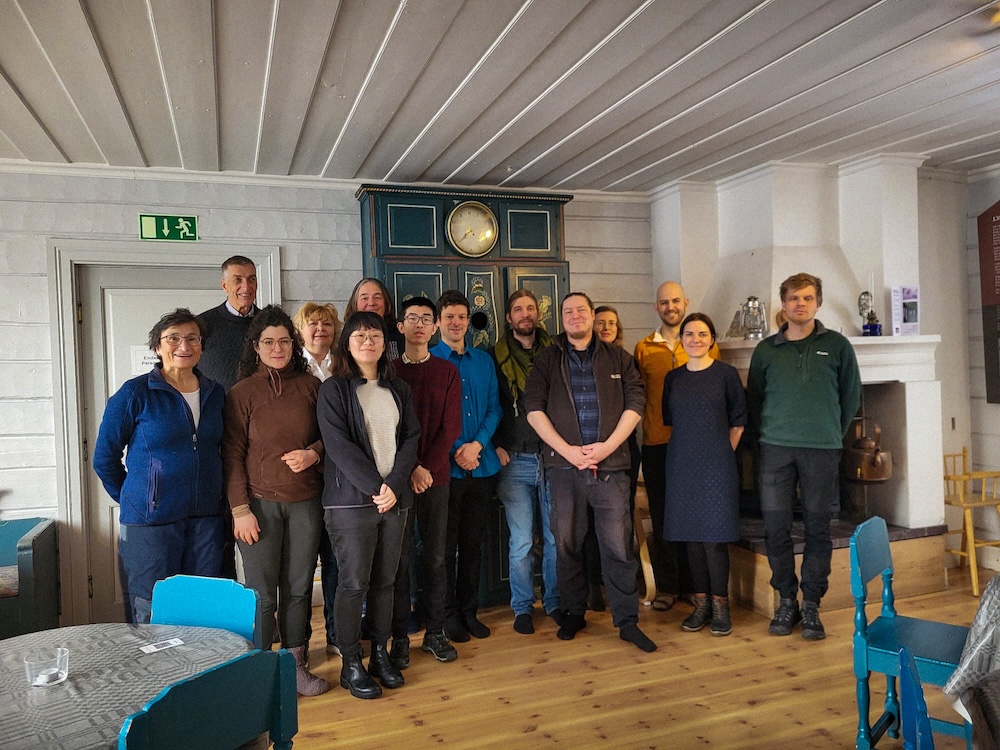
On March 17-20, 2025 at Lövånger, AI Policy Lab (AIPL), Responsible AI group and Research Group for Socially Aware AI had a 3.5-day retreat with 15 participants from both units and Francien Dechesne from Leiden University, Netherlands.

Participants discussed responsible AI from multiple perspectives – technological, ethical, and social. Below we share the key messages from the retreat. We hope to inspire future multidisciplinary discussions, workshops and projects related to responsible AI research, literacy, and practical solutions for diverse stakeholders in Sweden and internationally.

Question Zero & Human Responsibility

When we hear about new AI ventures, we need to ask the question zero: “Is the adoption of an AI tool the best solution for our current problem?” with assessments including the environmental costs of running this AI system and understanding of what specific aspects of operations it improves. This includes critically assessing who is participating, what is the provenance and the management of data, what are the bases for modelling and design choices, how will results and impact be evaluated. AI does not happen to us, we [humans] design and/or adopt and use the AI systems. 

  • Responsible AI development should follow a compositional approach, where verified datasets and models with clear principles can be combined to create new systems. This framework emphasises the need to balance ethical considerations and accuracy while accounting for differences across sectors, industries, and global value systems. The approach prioritises sustainability, transparency, control, regulation, participation, inclusiveness, trust, and fairness, with a focus on measuring societal implications and ensuring equal representation and identification. 
  • True AI fairness goes beyond mathematical equality, considering historical disparities and contextual factors, and diverse definitions of fairness, as mathematical fairness alone can still create discriminatory outcomes in complex social settings. 
  • Participation, where people meaningfully contribute to (design) decisions, strengthens democracy and supports responsible design, development, and use of AI. However, participation alone does not guarantee better outcomes; thoughtful design is needed to prevent manipulation and address blind spots by incorporating diverse perspectives. 
  • Technological change is ecological, not additive, in that it is transformative and systemic rather than simply incremental, fundamentally reshaping existing environments and society. Drawing from Neil Postman’s (1995) framework, technological innovations fundamentally transform existing systems rather than simply adding new capabilities, creating trade-offs, winners and losers, and often leading to reframing how we perceive the world. 
  • Structural challenges. Several “traps” hinder responsible AI research: the framing trap (failure to model entire systems), portability trap (ignoring context sensitivity), formalism trap (oversimplifying social concepts), ripple effect trap (missing ecological impacts), and solutionism trap (overreliance on technological fixes). 
  • AI Art. The concept of “AI as a mirror” raises important questions about artistic expression, with significant differences between the inner experience of human artistic creation versus AI-assisted art generation, challenging traditional perspectives on IP rights, creativity (human only, genAI only, human-AI hybrid), intention, and artistic value. 

If the ideas above resonate with you, we encourage to check out the AI Policy Lab LinkedIn page for common cooperation opportunities.