Virginia Dignum receives 2026 Nordic DAIR Awards Lifetime Achievement Award in AI

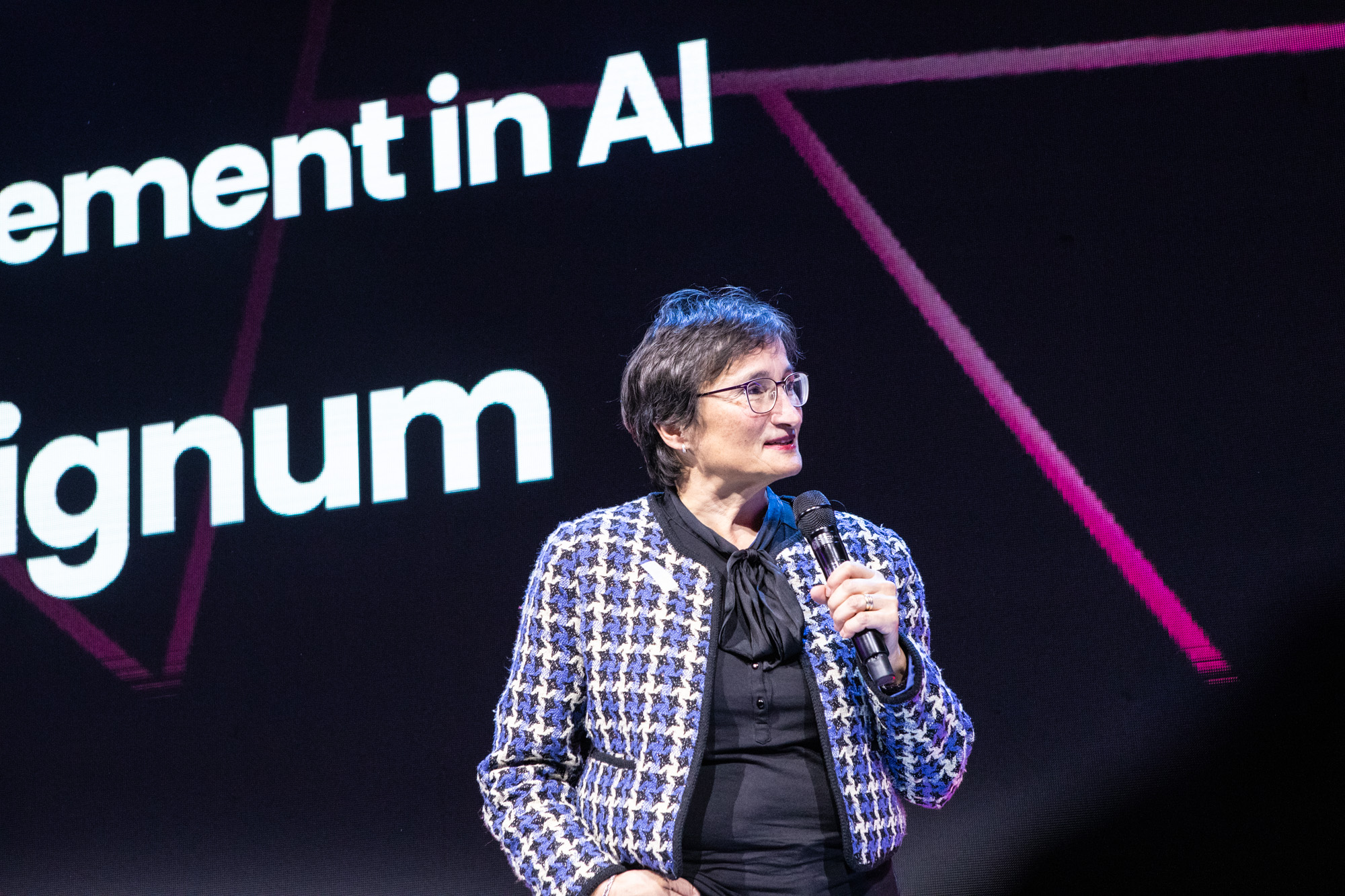
On May 7, 2026, Virginia Dignum, Director of the AI Policy Lab and Professor of Responsible Artificial Intelligence at Umeå University, has been named the 2026 Nordic DAIR Awards Lifetime Achievement winner in AI!

The DAIR Awards, Data and AI Readiness Awards, recognize achievements in data, analytics and AI across the Nordic region. In 2026, the awards are integrated into the Data Innovation Summit in Stockholm, bringing recognized work in AI and data directly into one of the region’s major meeting places for practitioners, leaders and innovators.

This year’s awards focus on maturity and real-world impact in AI and data.

Against this backdrop, Virginia’s recognition highlights her long-standing contribution to responsible AI, AI ethics and AI policy. Her work has helped shape international discussions on how AI can be developed and governed in ways that place human values, accountability and societal benefit at the center.

In its award citation, DAIR writes:
“There are few individuals whose work has shaped the ethical and technical landscape of AI as profoundly as Virginia Dignum. As a world-renowned researcher and a leading voice in Responsible AI, Virginia has spent her career ensuring that as we build more powerful systems, we do so with human values at the center.”

At the AI Policy Lab, we are proud to see Virginia’s work recognized in this way. Her leadership continues to inspire researchers, policymakers, students and partners working toward responsible and trustworthy AI.

Warm congratulations, Virginia!

Could not load the image

Could not load the image

1 / 2

About DAIR

The DAIR Awards (Data and AI Readiness Awards) recognize organizations that lead the way in using data, analytics, and AI to drive measurable business and societal impact. Focused on organization achievements, the awards highlight companies that demonstrate strategic vision, innovation, mpact and maturity in their data, analytics and AI practices. Through the recognition of real-world success stories, the DAIR Awards aim to accelerate the adoption of data-driven technologies, inspire others to follow best practices, and benchmark progress across the Nordic region’s most advanced organizations.

Film Screening and Discussion: Humans in the loop

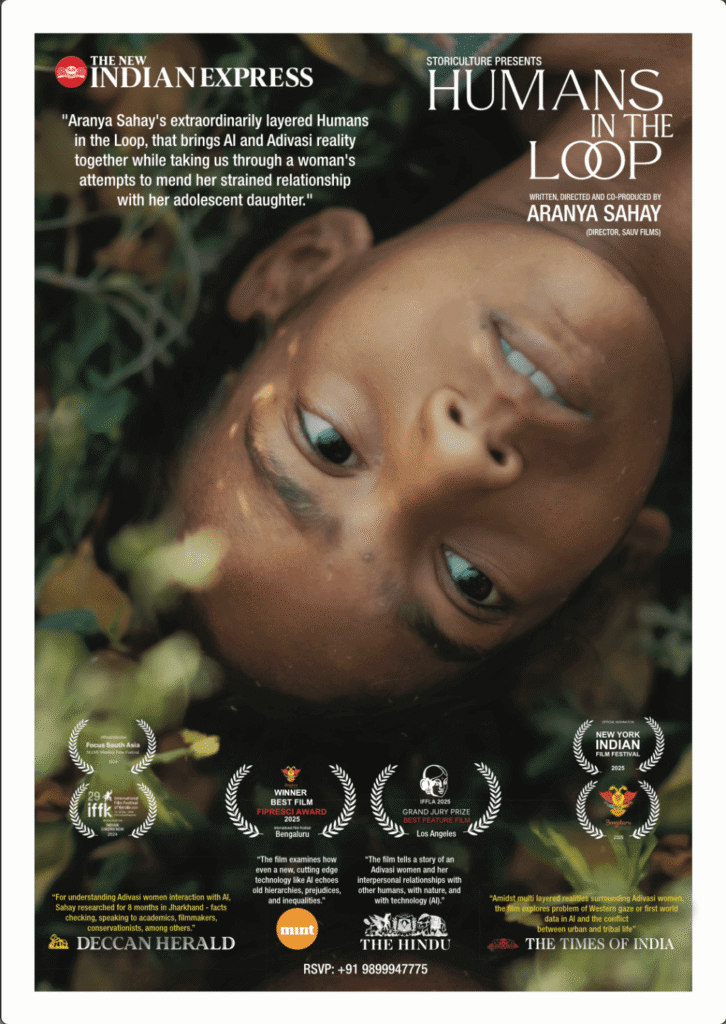
Close out AI Policy Lab Day with a special screening of the acclaimed independent documentary Humans in the Loop, a powerful portrait of a young data annotator navigating the rapidly shifting AI industry in India.

Film Screening

A groundbreaking 72-minute Hindi-Kurukh film follows Nehma, an Adivasi woman from Jharkhand’s Oraon tribe who trains AI systems as a data labeller. Director Aranya Sahay (FTII) was inspired by journalist Karishma Mehrotra’s exposé, revealing how over 70,000 Indians – mostly rural women – form AI’s invisible workforce.

A striking, human-centered view of AI from the ground up.

The 72-minute film will be followed by a discussion on the hidden role of data workers in AI.

Snacks and warm drinks will be available!

This film screening is a part of the AI Policy Lab Day programme.

Webinar: How can we soften the blow for the public sector when the Gen-AI bubble bursts?

About the Workshop

With significant public investment and political capital currently riding on AI, particularly generative AI, the socio-economic and political consequences of the hype bubble bursting will be profound. This would be a fork in the road for states, and state authorities who have been championing and adopting GenAI. These actors can either change course, and seek new ways to tackle societal challenges, or continue to implement sub optimal and potentially harmful applications using GenAI. Given that many states have aligned with the techno-solutionist discourses and have framed AI adoption in terms of geopolitical positioning, the latter is more likely.  

To prepare for this, and mitigate its potential harms, the workshop will focus on the organisational, technical, and social tools we can develop in advance to cushion the societal impacts of the GenAI bubble bursting. In doing so, we aim to preserve institutional legitimacy, redirect existing AI investments toward salvaging public benefit, and maintain old, and open new, avenues for AI development that aligns with the public interest. We will do so by focusing on a range of scales, from the geopolitical to the local.  

We invite participants to reflect on how a range of stakeholders, such as governments, civil society, and academia, can respond to the decline of GenAI in ways that promote resilience, accountability, and long-term public value.  

Panel discussion between

  • Virginia Dignum, Professor in Responsible AI, Director Policy Lab, Department of Computing Science, Umeå University.  
  • Gary Marcus, Scientist, author and entrepreneur, known as a leading voice in AI. Six books including The Algebraic Mind, Rebooting AI, and Taming Silicon Valley; NYU Professor Emeritus. 
  • Wendy Hall, Regius Professor of Computer Science at the University of Southampton and Director of the Web Science Institute. A pioneer in AI policy and web science, she co-chaired the UK Government’s AI Review and now serves on the UN’s High-Level Advisory Body on Artificial Intelligence
  • Gry Hasselbalch, Danish author and scholar specialising in the politics and power dynamics of technology, with a focus on data, AI ethics, and the historical forces shaping technological development.
  • Joshua Gans, Professor of Strategic Management, at the University of Toronto; economist who studies innovation, entrepreneurship, and business strategy and author of The Prediction Machine.
  • Frank Dignum, Professor in socially-aware AI, Department of Computing Science, Umeå University, Director of Umeå University’s research center on Transdisciplinary AI for the Good of All (TAIGA). 

Moderator:
Jason Tucker
Adjunct Associate Professor at the AI Policy Lab, Umeå University and Researcher at the Institute for Futures Studies.

Participation

The workshop will run for 90 minutes, combining short expert talks with an open discussion.
Participation is open to anyone interested in the societal and policy implications of AI, whether you work in government, academia, civil society, or simply want to join the conversation.

Register here to reserve your place.

AI Policy Lab Day 2025

Join us on Wednesday, November 19 for AI Policy Lab Day 2025 – an interactive afternoon showcasing the lab’s work on responsible AI and engaging participants in real, practical conversations. The event features highlights from the AIPL’s projects, a keynote on Question Zero in AI and a hands-on clinic where we invite your toughest AI policy questions.

Whether you’re a policymaker, researcher, student, or practitioner, this is a space to learn, challenge ideas, and share insights across sectors.

Keynote speaker: Prof. Sennay Ghebreab (Amsterdam University)

Agenda

12.30 – Lunch & networking


13.00 – Welcome & AI Policy Lab presentation
Updates & insights from the Lab’s ongoing work by Virginia Dignum, Director of the AI Policy Lab


13.15 – Keynote: Prof. Sennay Ghebreab (University of Amsterdam)

Title:

Abstract:

Rethinking Question Zero in AI

Question Zero – the question of whether AI is the right answer to a problem – has become more prominent in discussions of Responsible AI. This is encouraging, since AI is often adopted as a quick fix, sometimes with harmful consequences for people and the environment. At the same time, there is a growing risk that organizations and governments may misuse Question Zero as a reason not to apply AI in cases where it benefits people and the environment. In this talk, I will explore cases from the Dutch context that highlight different ways of engaging with Question Zero and discuss why it is worth rethinking how we approach this question in AI.


14.30 – Poster Presentations


15:15 – Talk by Dan McQuillan

Title:

Abstract:


16.00 – AI Policy Café – Drop-in Clinic


Explore research from Lab members Topics: AI and human rights, healthcare, education, anti-capitalist perspectives, transparency & explainability


Decomputing

This talk will characterise contemporary AI as the broken product of an already-broken system. While AI sucks more of everything into its cycle of simulated solutions, it diverts us from the underlying structural and environmental crises. By focusing on energy as the conjunction of materiality and hype at the heart of the AI question, the talk will outline ‘decomputing’ as possible response to technocratic nihilism. Decomputing combines degrowth and conviviality into a policy for post-collapse liveability, where the cybernetic may still find a place in support of the common good. 


Bring your real-world AI policy or ethics cases, questions, or dilemmas.
Our team will offer ideas, support, and resources in an open, informal format. Think: a cross between a helpdesk, repair café, and fika table. No preparation is needed.


16:45 – Wrap-Up

Announcing the AI Policy Lab’s Drop-in Clinic:

A space to discuss real-life cases in AI policy and ethics.

Got an AI policy or ethics challenge or practical implementation questions? Our team will provide pointers, support, and fresh ideas to help you move forward.

Who this event is for: Policymakers, practitioners, researchers, students, or anyone facing AI-related challenges
What to bring: Any question, case, or challenge related to AI governance, ethics, or implementation
What you’ll get: Practical advice, connections to resources, and space to explore solutions together

Evening Program: Film Screening

Film Humans in the Loop
Rotundan, Universum, Umeå University
19:30-21:30 | Wednesday, November 19

Close out AI Policy Lab Day with a special screening of the acclaimed independent documentary Humans in the Loop, a powerful portrait of a young data annotator navigating the rapidly shifting AI industry in India.

A groundbreaking 72-minute Hindi-Kurukh film follows Nehma, an Adivasi woman from Jharkhand’s Oraon tribe who trains AI systems as a data labeller. Director Aranya Sahay (FTII) was inspired by journalist Karishma Mehrotra’s exposé, revealing how over 70,000 Indians – mostly rural women – form AI’s invisible workforce.

A striking, human-centered view of AI from the ground up.

The 72-minute film will be followed by a discussion on the hidden role of data workers in AI.

Snacks and warm drinks will be available!

Registration is required and places are limited.

We look forward to welcoming you to the AI Policy Lab Day at Umeå University!

Recording – Externships Information Session

AI Policy Lab Externship Information Session with Viktoria Movchan and Tatjana Titareva

Date: September 24, 2025

?? Presentation Slides can be downloaded here.

Recording

AI Policy Lab Fellowship Information Session with Virginia Dignum

Date: May 6, 2025

Opening AI Policy Lab

Invitation

On 18 June 2024, from 13.00-17.oo, the AI Policy Lab will officially open!

You are welcome to join us at MIT-huset A400 (see location in mazemap) for an afternoon filled with presentations, informal conversations and the opportunity to explore the premises.

The program is as follows:

13.00 – Opening by Virginia Dignum, director of the AI Policy Lab

13.15 – Bertram Malle, Brown University: Trust in and Trustworthiness of Artificial Agents

Abstract:

If artificial agents should deserve human trust, they must be trust-worthy.  But what makes a system worthy of trust?  I will introduce a model of human trust in other agents (whether persons, institutions, or machines) that specifies five dimensions of trustworthiness: competence, reliability, integrity, transparency, and benevolence.  I will show that ordinary people think of trust as expectations that the other agent has those attributes. I will then explore how an artificial agent might meet those expectations.  

14.00 – Ericka Johnson and Saghi Hajisharif, Linköping University: Bias and representation in synthetic data

Abstract:

Bias is an issue in the real world and for the AIs learning from real world data. But if we know a dataset is biased, one could hoped that making a curated synthetic data would be a way of eliminating that bias. However, while there is quite a bit of work being done to produce more just datasets through synthetic data, at the same time, work we are doing is demonstrating the challenges of caring for intersectional representation when generating synthetic data. This presentation of our findings ends with a question to the audience about how synthetic data should be labelled and regulated.

14.45 – Q&A

15.15 – Snacks and open house

17.00 – End

We look forward to welcoming you at the opening of the AI Policy Lab!


Morning program

In the morning, we are holding presentations from the MMW Project “AI: destroyer or enabler of democracy”

9.30 – Welcome and fika 

10.00 – 12- 00 – Short presentations (10+minutes each, followed by panel Q&A (topics tbc)

·     Privacy and Self-determination (Kalle Grill and Björn Lundgren) 

·     Automated decision-making in the public sector (Andreas Ojehag) 

·     Political studies of automated governing (Malin Rönnblom) 

·     Democracy and self-determination in a participatory design process in the public sector of a virtual coach for behaviour change (Helena Lindgren) 

·     Global AI governance (Virginia Dignum) 

·     Tool/method for exploring enactment of self-determination (Luis Gustavo Ludesher) 

12.00 – Lunch 

LAUNCHING AIPEX – AI policy Exchange Forum

We are thrilled to introduce the AI Policy Exchange Forum (AIPEX), an open online platform dedicated to fostering academic discussion on AI policy and governance. AIPEX bridges the gap between an academic journal and a blog, providing rapid, citable, and lightly-reviewed publications to stimulate global debates on emerging AI issues.

We look forward to your contributions and engagement in meaningful discussions.

Learn more and submit your contributions here: aipolicy.se/aipex.

AI POLICY LAB STARTS AT UMEÅ UNIVERSITY

As a new initiative at Umeå University, the AI Policy Lab will explore how governance and policy structures can handle the human and societal impact of AI. The lab will be a hub bringing researchers from different disciplines, facilitating collaborative research and a trust-building network. Read more

2023 – The year of AI governance

The year 2023 marked a turning point for Artificial Intelligence (AI) governance. As AI technologies rapidly evolve, their profound impact on society and the economy is leading to increasing needs towards a coordinated approach to governance, a challenge that can only be addressed globally. 2023 has been a testament to that need, with major strides taken internationally to address the promises and perils of AI. In this article, I provide a timeline of the main events that shaped policies around AI during the past year, providing a comprehensive record, chronicling pivotal events and developments that have shaped the global discourse on AI regulation and its ethical implications.

Not only global events such as the groundbreaking approval of the EU’s AI Act to the creation of the UN’s Advisory Body on AI, but also various nations and organizations are stepping up their own AI policies and calls for action for a more responsible and inclusive AI were heard from different directions. The timeline below illustrates how the world is understanding the need for regulation of the potential risks and opportunities presented by AI. It’s a global challenge, one that demands collective effort and vigilance. Each entry in this timeline represents a significant moment in the journey towards responsible AI governance. They reflect a world in rapid transition, grappling with the complexities of AI and striving to harness its potential responsibly and ethically.

Looking forward, we can expect further recognition of the global impact of AI. Rapid advancements in AI technology, as evidenced by the release of e.g. GPT-4 and Gemini, have instigated a sense of urgency among policymakers and industry leaders to establish a regulatory framework.

However, in my opinion this does not imply that a uniform, global approach to AI regulation is needed, or even desirable. It is important to understand and accept that different regions, countries and sectors have unique backgrounds, cultures and needs. Nevertheless, increased urgency towards collaboration across the globe is needed. In order to support shared understanding, build bridges and ensure that benefits and opportunities are accessible to all and inclusive of differences. The variety of regulations and guidelines proposed or enacted worldwide indicates that different regions tailor their AI governance strategies to their unique cultural, ethical, and socio-economic contexts, but initiatives like the G7 Hiroshima AI Process and UNESCO’s urgent call for AI rules, or UN’s efforts to define a global governance approach, highlight the importance of international dialogue for effective AI policies.

Finally, regulation and governance must be implemented and understood not as something that hinders innovation, but much more as a stepping stone encouraging AI innovation. Governance measures not only spur AI developments towards responsible and beneficial directions, but also open up new research and innovation opportunities to define, develop and implement methods, tools and frameworks to support governance.

As AI continues to evolve, so will the challenges and opportunities it presents. This requires governance frameworks to be adaptable and forward-thinking. Ensuring that AI governance is inclusive, considering the needs and voices of diverse populations, will be crucial for equitable and sustainable AI development. This requires an ongoing, open and transparent dialogue among governments, industries, academia, and civil society to navigate the complex landscape of AI governance effectively. Such efforts will undoubtedly shape the trajectory of AI development and its societal integration, emphasizing the need for thoughtful, inclusive, and dynamic governance strategies.

An annotated timeline of AI (policy) events in 2023

January

  • 26: In the US, the National Institute of Standards and Technology (NIST) releases AI Risk Management Framework. This framework, developed in collaboration with the private and public sectors, is intended for voluntary use and to improve the ability to incorporate trustworthiness considerations into the design, development, use, and evaluation of AI products, services, and systems.

March

April

  • 11: China issues strict regulations on AI systems. These measures, which draft was open to public comments until 10 May, aim to govern generative AI service provision in China.
  • 13: US Senate leader Chuck Schumer announces plans to legislate AI. The proposal focuses on building a flexible and resilient AI policy framework across the federal government that can adapt as the technology continues to advance. It aims to foster innovation and the continued US leadership in the development of AI, while enhancing security, accountability, and transparency.
  • 17: EU legislators call for an emergency global summit. In a reaction to FLI’s ‘pause letter’, a group of members of the EU parliament urged world leaders to hold a summit to find ways to control the development of advanced artificial intelligence (AI) systems such as ChatGPT. Comment: Such a Summit has, as yet not materialised, having been superseded by the UK’s Safety Summit in October.
  • 26-28: The World Economic Forum (WEF) holds a summit on Responsible AI that resulted on the Presidium Recommendations to guide technical experts and policy-makers on the responsible development and governance of generative AI systems.

May

  • 4: US’s White House calls emergency meeting of leading AI CEOs during which the president stressed the need to mitigate both the current and potential risks AI poses to individuals, society, and national security, in order to realize the benefits that might come from advances in AI.
  • 12: Brazil’s government proposes an AI Bill. This proposal, that follows a risk-based approach similar to the EU’s AI Act, aims to create rules for the operation of AI systems in Brazil, establishes rights for people affected by their operation, and provides for penalties for violations, as well as information regarding the supervising body. Correction by Dora Kaufman : There isn’t yet a proposal for an AI bill, but the Brazilian Senate constituted a commission of Senators to analyze proposal PL 2338.
  • 16: OpenAI calls for governments to enact AI safety
  • 25: European leading AI researchers meet at the EU parliament to discuss the role of Europe on AI development and fundamental researcher, stressing the need for sovereignty
  • 30: G7 ‘Hiroshima AI process’ on global AI governance started aiming to aims to promote safe, secure, and trustworthy AI worldwide and provide voluntary guidance for actions by organizations developing the most advanced the rules for digital technologies,  including the most advanced foundation models and generative AI systems, to ensure that these are in line with “our shared democratic values”.
  • 30: The Center for AI Safety releases an open letter aiming at a less alarmistic and futuristic view than the FLI open letter, with the very short message: “Mitigating the risk of extinction from AI should be a global priority alongside other societal-scale risks such as pandemics and nuclear war.

June

August

  • 15: China’s “Interim Measures” on Generative AI  enter into force. The measures, that reflect the feedback from different stakeholders, are issued by the Cyberspace Administration of China (CAC) together with six other central government regulators. The measures aim at regulating the provision of generative AI services, such as ChatGPT, to the public of mainland China and have been formulated in accordance with existing laws and regulations. The AI Measures aim to ensure that a healthy environment can be fostered within China that allows for the responsible use of generative artificial intelligence without causing undue harm to the national security, social and public interest, and the legitimate rights and interests of the citizens, including legal persons and organizations.

September

  • 27: Canada releases a voluntary code of conduct specific to generative AI. This proposal goes beyond risk mitigation, encouraging its signatories to promote and build a robust and responsible AI ecosystem in Canada. The code provides a set of measures that support upcoming regulation pursuant to AIDA, emphasizing developing and managing the operations of generative AI systems

October

November

  • 1: UK holds the AI Safety Summit aiming to set UK’s UK’s position as a world leader in AI safety. The summit, hailed as a diplomatic breakthrough after it produced an international declaration (the Bletchley Declaration on AI Safety)  to address risks with the technology, as well as a multilateral agreement to test advanced AI Models. The event was however heavily criticised by a.o. civil society organisations for mostly including tech execs and government officials.
  • 6: (entry proposed by Clara Lin Hawking): release of 01.AI’s open source large language model Yi-34B trained from scratch and finetuned for various chat usecases.
  • 13-15: WEF’s AI governance summit: This initiative, following WEF’s meeting in April, focused on responsible generative AI, bringing together influential regional voices and global stakeholders to harness the benefits of generative AI systems and technologies while ensuring equitable and sustainable global impacts.
  • 15: In the US, a bipartisan group of senators introduces the AIRIA Act.The AIRIA is the latest in the efforts of the US in establishing a safe and innovation friendly environment for the development and deployment of AI, with the dual aim of encouraging innovation while establishing a framework for accountability.

December

  • 6: Google launches Gemini: Gemini is Google’s latest multimodal (text, image and video) large language model, and their answer to compete with OpenAI’s GPT4. Gemini, they claim, is their ‘most flexible model yet — able to efficiently run on everything from data centers to mobile devices’.
  • 9: Europe’s trilogue agrees on the AI Act: A significant step on AI regulation, this world primeur, aims not only to enhance governance and effective enforcement of existing law on fundamental rights and safety, but also to promote investment and innovation in AI within the EU, and to facilitate the development of a single market for AI applications.
  • 21: The UN Advisory Body on AI releases draft recommendations: this interim report calls for anchoring AI in international law, human rights, and the Sustainable Development Goals. It also identifies AI governance critical functions and principles. In 2024, the UN AI Body will explore options for institutionalizing these functions, through a program of consultations with diverse stakeholders worldwide.

Our book “Social Simulation for a Crisis” is out now

Simulating for a crisis is far more than creating a simulation of a crisis situation. In order for a simulation to be useful during a crisis, it should be created within the space of a few days to allow decision makers to use it as quickly as possible. Furthermore, during a crisis the aim is not to optimize just one factor, but to balance various, interdependent aspects of life. In the COVID-19 crisis, decisions had to be made concerning e.g. whether to close schools and restaurants, and the (economic) consequences of a 3 or 4-week lock-down had to be considered. As such, rather than one simulation focusing on a very limited aspect, a framework allowing the simulation of several different scenarios focusing on different aspects of the crisis was required. Moreover, the results of the simulations needed to be easily understandable and explainable: if a simulation indicates that closing schools has no effect, this can only be used if the decision makers can explain why this is the case. This book describes how a simulation framework was created for the COVID-19 crisis, and demonstrates how it was used to simulate a wide range of scenarios that were relevant for decision makers at the time. It also discusses the usefulness of the approach, and explains the decisions that had to be made along the way as well as the trade-offs. Lastly, the book examines the lessons learned and the directions for the further development of social simulation frameworks to make them better suited to crisis situations, and to foster a more resilient society.

The book is available here: https://www.springer.com/gp/book/9783030763961

ASSOCC on national tv

On 23 April, the Swedish broadcaster TV4 run a piece on the work of ASSOCC in their evening news program showing how social simulation provides insights into the impact of corona pandemic policy interventions. You can watch it here: https://www.tv4play.se/program/nyheterna/nyheterna-1900-23-april-2021-s%C3%A4song-2021/13336311 (starts at 14:35)