
Workshop #288: An AI Policy Research Roadmap for Evidence-Based AI Policy
Date & Location: June 26, 2025, Oslo, Norway
At the UN’s Internet Governance Forum (IGF) 2025 in Oslo, Norway, AI Policy Lab @Umeå University (Virginia Dignum, Jason Tucker, Tatjana Titareva and colleagues) and Mila – Quebec Artificial Intelligence Institute (Isadora Hellegren Létourneau, and colleagues), in cooperation with our partners including Alex Moltzau, Eltjo Poort, Neema K. Lugangira, and many others, launched the Global AI Policy Research Network (GlobAIPol). The network invites diverse stakeholders to share practical knowledge that supports ethical, transparent, and evidence-based practices for shaping inclusive and trustworthy AI policies. The session also encouraged global stakeholders to endorse the Roadmap for AI Policy Research.
🔗 Explore GlobAIPol
🔗 Endorse the Roadmap for AI Policy Research
Three key takeaways:
- AI regulation requires agile, evidence-based approaches – technological policymaking is not set in stone.
- Multiple complementary frameworks serve diverse regional needs better than universal governance approach.
- Effective AI policy is not only about technology – it’s about equity, inclusion, and broader societal impacts.

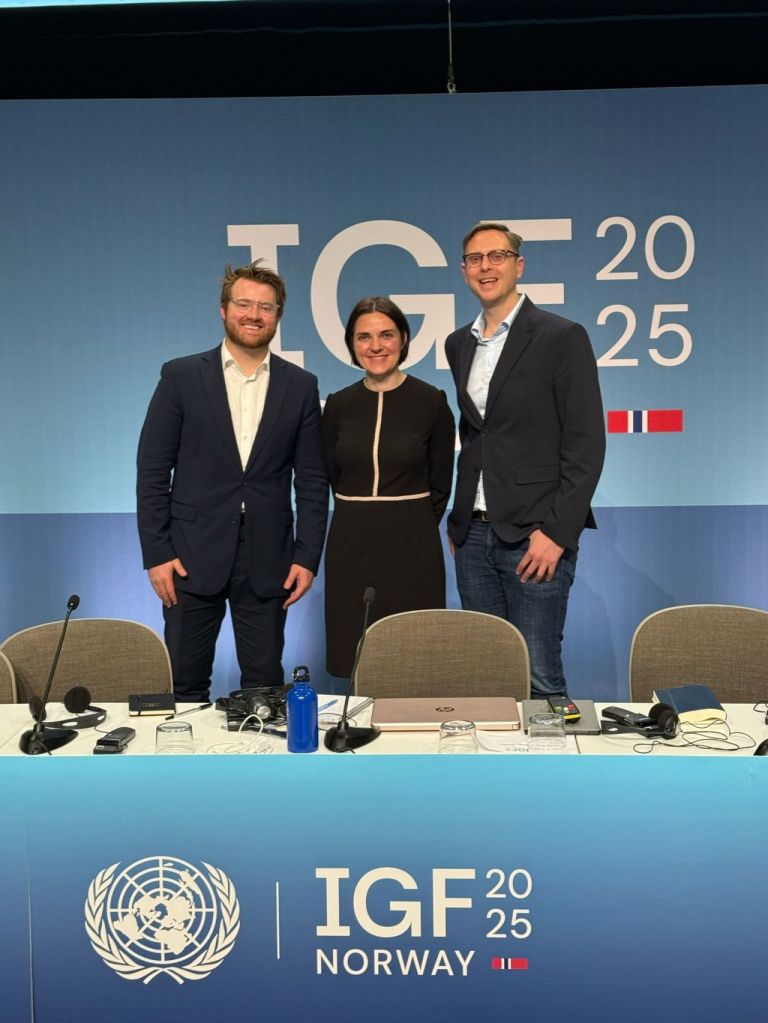
The official session summary is now available:
📝 Read the official session summary on the IGF website (tab “Report”)
🎥 Watch the full session recording
Key insights from our session:
“AI does not happen to us! AI is designed by humans. We make the choices.” – Professor Virginia Dignum’s keynote reminded us that before asking how to implement AI, we must ask Question Zero: Is AI the best option here? We need to shift from fragmented, reactive policies to coordinated, evidence-based strategies rooted in ethics and justice.
The interventions and discussion revealed critical lessons from global perspectives:
The EU is demonstrating promising approaches with the European AI Office expanding from 97 to 140 staff by the end of 2025, supporting regulatory sandboxes and international collaboration including a €5 million generative AI initiative with Africa.
In healthcare, we must move beyond treating AI as a “magic pill” and build upon existing regulatory frameworks – just as we trust paracetamol today because of rigorous oversight developed several decades ago.
Well-designed regulation stimulates innovation rather than slows it down. Different countries need diverse legislative approaches harmonised with local values, not a one-size-fits-all global AI governance structure.
The time to act is now. AI is shaping our collective future, and how we act today will define who benefits, who is heard, and who is left behind.


 AI Policy Lab
One response to “Global AI Policy Research Network Launched at UN IGF 2025 (Recording available)”
[…] through a sociotechnical lens to foster a Public Interest AI ecosystem. Workshop organized by the Global AI Policy Research Network, led by Roel Dobbe at Delft University of Technology and Nitin Sawhney, Uniarts Research Institute. […]
LikeLike